




Best e-TNS Migraine Device in 2026
Migraine is a neurological disease that can affect work, sleep, family life, and daily routines. For people who want a drug-free treatment format, FDA-cleared neuromodulation devices offer several non-invasive approaches for acute treatment, preventive treatment, or both.
External trigeminal nerve stimulation, or e-TNS, applies controlled electrical stimulation through the skin to branches of the trigeminal nerve, the primary pathway for migraine pain. Cefaly uses this technology through an electrode placed on the forehead, between and just above the eyebrows.
This review ranks Cefaly as the best e-TNS migraine device in 2026 and also covers alternative FDA-cleared neuromodulation devices that use different technologies, placements, and access models. The ranking is based on practical product characteristics rather than cross-trial comparisons between separate clinical studies.
Key Takeaways
- Cefaly ranks first for e-TNS: It combines acute and preventive treatment programs, prescription-free access, reusable ownership, and Cefaly-specific clinical evidence in one forehead-worn device for adults.
- Neuromodulation devices are not interchangeable: Available technologies include e-TNS, remote electrical neuromodulation, non-invasive vagus nerve stimulation, single-pulse transcranial magnetic stimulation, combined trigeminal-occipital stimulation, and other forms of transcutaneous electrical stimulation.
- The OTC landscape changed in 2026: Cefaly, HeadaTerm 2, and Enso for Migraine have different over-the-counter clearances in the United States. Cefaly remains available without a prescription in the U.S., Canada, the EU, and other countries.
- Practical differences matter: Cleared use, age indication, prescription status, placement, session format, reusable or refill-based design, regional access, and device-specific safety information should guide comparisons.
Understanding e-TNS for Migraine
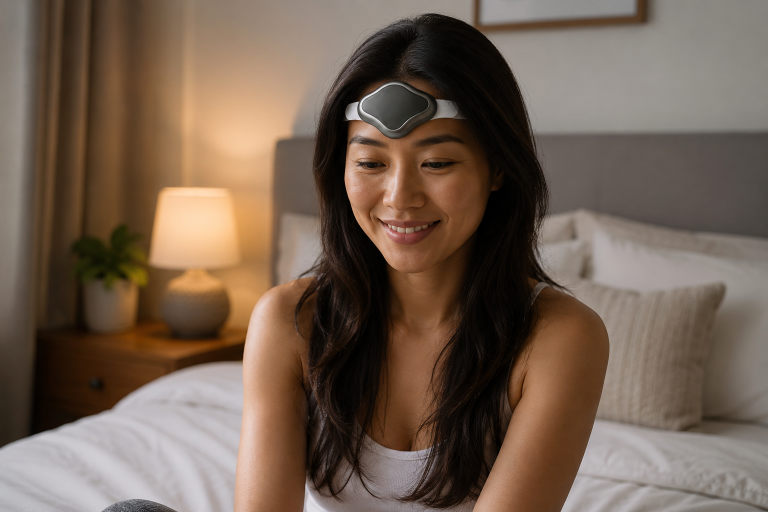
E-TNS devices deliver mild electrical impulses to upper branches of the trigeminal nerve through electrodes placed on the skin. With Cefaly, a self-adhesive electrode is centered on the forehead, and the reusable device connects magnetically to it.
Because Cefaly is drug-free and works locally, it does not add medication-related systemic exposure or drug interactions. That does not mean the device has no possible side effects. Cefaly reports generally minor and reversible effects that can include sleepiness, headache after a session, temporary forehead redness, nausea, skin irritation, or rare skin allergy.
During a session, users may feel tingling, prickling, vibration, or a deeper pulsing sensation. Stimulation should remain strong but comfortable and should not be painful. Treatment schedules differ by device and indication, so users should follow the instructions for the specific product.
How We Evaluated Migraine Devices
We reviewed current FDA-cleared uses, prescription requirements, age indications, placement, treatment format, product design, access pathways, and manufacturer information. Cefaly-specific clinical evidence is included because it directly supports Cefaly’s acute and preventive programs.
Competitor study percentages are not used to rank devices. Results from separate trials should not be treated as head-to-head comparisons because study populations, endpoints, treatment protocols, sham methods, and analysis plans can differ.
1) Cefaly
Best For: Adults seeking one reusable, prescription-free e-TNS device for acute and preventive migraine treatment
FDA-Cleared Use: Acute treatment of migraine with or without aura and preventive treatment of migraine in adults age 18 and older
Prescription: Not required in the U.S., Canada, the EU, and other countries
Age Range: 18+
Cefaly is a forehead-worn external trigeminal nerve stimulation device designed specifically for migraine. Cefaly became the first FDA-cleared migraine treatment device for prevention in 2014, received acute-treatment clearance in 2017, and became available over the counter in the United States in 2020.
More than 300,000 people have used Cefaly globally. In 2025, Cefaly also announced that it was the most frequently ordered neuromodulation device for migraine within the Veterans Health Administration, based on 2024 ordering data.
Key Features
- Two treatment programs: The 60-minute Acute program is used during a migraine attack, while the 20-minute Prevent program is used daily for preventive treatment.
- Reusable device format: The device attaches magnetically to a replaceable forehead electrode rather than requiring a new treatment unit for every session.
- Prescription-free access: Adults can purchase Cefaly without obtaining a prescription in the U.S., Canada, the EU, and other countries.
- App support where available: Cefaly Connected pairs with the Cefaly app for treatment control, migraine logging, reports, weather information, and supported wearable integrations.
- Customer support: Free personal coaching can help users learn electrode placement, treatment modes, intensity adjustment, device care, and app functions.
- Satisfaction guarantee: Qualifying products purchased directly from cefaly.com may be returned within 90 calendar days of the product delivery date under the published return policy.
Cefaly Connected, the Cefaly Migraine Relief app, and coaching services are not currently available in the EU. Regional product and service availability may vary.
Cefaly Clinical Evidence
Cefaly’s clinical studies page summarizes more than 20 years of research, more than 12 clinical trials, 18 peer-reviewed publications, and three pivotal prospective, multicenter, sham-controlled randomized trials.
- ACME study: After one hour of Cefaly Acute treatment, 79% of patients experienced a significant reduction in headache pain, and 63% reported that pain decreased by half or more.
- TEAM study: After two hours of treatment, 56.4% of patients reported resolution of their most bothersome migraine symptom, and 42.5% reported resolution of all migraine-associated symptoms.
- PREMICE study: After three months of Prevent treatment, 38.1% of patients achieved at least a 50% decrease in migraine days.
These findings describe results from Cefaly studies and do not guarantee that every user will respond in the same way.
Why Cefaly Ranks First
Cefaly ranks first in this review because it combines acute and preventive treatment in one reusable e-TNS device, does not require a prescription, and is supported by a substantial Cefaly-specific research program. Its app, coaching, HSA/FSA eligibility, financing resources, and satisfaction guarantee add practical support beyond the treatment sessions themselves.
The main considerations are the upfront device cost, recurring electrode purchases, and an adult-only indication. Users who need pediatric eligibility, a different placement, a prescription-based coverage pathway, or another neuromodulation mechanism may prefer one of the alternatives below.
2) Enso for Migraine
Best For: Eligible adults seeking an app-controlled, over-the-counter electrical stimulation device through a participating Hinge Health program
FDA-Cleared Use: Acute treatment of migraine with or without aura and preventive treatment of migraine in adults age 18 and older who have been diagnosed with migraine by a physician
Prescription: Not required under its FDA clearance
Age Range: 18+
Enso for Migraine received FDA clearance on April 16, 2026. It is a wearable, app-controlled transcutaneous electrical nerve stimulation system that delivers stimulation through electrodes integrated into a self-adhesive gel pad.
Key Features
- App-controlled treatment settings
- Reusable device with replaceable gel pads
- Acute and preventive FDA-cleared indications for adults
- Designed for use within Hinge Health’s broader migraine care program
- Access depends on program enrollment, benefit eligibility, and clinical criteria
Enso is relevant for adults who already have access to Hinge Health through an employer or health plan and prefer an app-centered care program. Its commercial access pathway is more program-dependent than Cefaly’s direct-to-consumer purchase model.
3) Nerivio
Best For: Children age 8 and older, adolescents, and adults who prefer an upper-arm wearable
FDA-Cleared Use: Acute and preventive treatment of migraine with or without aura in patients age 8 and older
Prescription: Required
Age Range: 8+
Nerivio uses remote electrical neuromodulation, or REN. The wearable is placed on the upper arm and controlled through a smartphone app rather than being worn on the head or neck.
Key Features
- Upper-arm placement
- Acute and preventive treatment in one prescription device
- Cleared for patients age 8 and older
- 45-minute app-controlled treatment sessions
- Used at migraine onset for acute treatment or every other day for prevention
- Recurring refill or treatment-unit requirements
Nerivio may be relevant when pediatric eligibility, discreet arm placement, or app-based treatment is the main priority. A healthcare provider must prescribe the device, and insurance coverage or pharmacy access can vary.
4) gammaCore
Best For: Patients prescribed a handheld neck-applied device, especially those comparing options across more than one headache disorder
FDA-Cleared Use: Acute and preventive migraine treatment in patients age 12 and older, with additional clearances for certain other primary headache disorders
Prescription: Required
Age Range: 12+
gammaCore uses non-invasive vagus nerve stimulation, or nVNS. The handheld device is placed against the side of the neck to deliver electrical stimulation through the skin to the vagus nerve.
Key Features
- Neck placement rather than forehead placement
- Brief two-minute stimulations within indication-specific treatment schedules
- Acute and preventive migraine use
- Adolescent and adult indication
- Additional headache indications, including cluster headache and certain indomethacin-responsive headache disorders
- Prescription and training pathway
gammaCore may be relevant for patients whose clinician prefers vagus nerve stimulation or who are managing more than one indicated headache disorder. Proper placement and device-specific treatment instructions are important.
5) SAVI Dual
Best For: Adolescents and adults who prefer magnetic stimulation without adhesive forehead electrodes
FDA-Cleared Use: Acute and preventive treatment of migraine in adolescents age 12 and older and adults
Prescription: Required
Age Range: 12+
SAVI Dual uses single-pulse transcranial magnetic stimulation, or sTMS. The handheld device is positioned at the back of the head and delivers a brief magnetic pulse rather than electrical stimulation through a skin electrode.
Key Features
- Magnetic stimulation with no adhesive forehead electrode
- Back-of-head placement
- Acute and preventive migraine treatment
- Cleared for patients age 12 and older
- At-home, self-administered prescription format
- Treatment history tracking through the SAVI Smart Diary
SAVI Dual may be relevant for people who prefer a non-electrode format or whose clinician recommends sTMS. Access uses a prescription and monthly service model, and insurance coverage can vary.
6) Relivion MG
Best For: Adults prescribed a head-worn device that stimulates both trigeminal and occipital nerve pathways during an acute migraine attack
FDA-Cleared Use: Acute treatment of migraine with or without aura in adults age 18 and older
Prescription: Required
Age Range: 18+
Relivion MG is a wearable neuromodulation headset that concurrently stimulates branches of the trigeminal and occipital nerves. It is intended for self-use at home after prescription and training.
Key Features
- Combined trigeminal and occipital stimulation
- Multi-contact headset design
- Acute migraine treatment only under its current FDA-cleared indication
- App-connected treatment and data functions
- Intended for adults age 18 and older
- Currently available in the United States
Relivion may be relevant for adults whose clinician recommends combined head-worn stimulation for acute treatment. It does not currently have a preventive migraine indication in the United States.
7) HeadaTerm 2
Best For: Adults seeking a lower-cost, over-the-counter forehead device focused on episodic migraine prevention
FDA-Cleared Use: Prophylactic treatment of episodic migraine in adults age 18 and older
Prescription: Not required in the United States
Age Range: 18+
HeadaTerm 2 is a rechargeable forehead-worn electrical nerve stimulator. Its FDA summary describes stimulation of the supraorbital and supratrochlear nerve region with user-adjustable intensity.
Key Features
- Over-the-counter access in the United States
- Forehead placement
- Rechargeable device
- Adjustable stimulation intensity
- Preventive indication for episodic migraine
- No FDA-cleared acute migraine indication
HeadaTerm 2 may be relevant for adults prioritizing a lower initial purchase price and preventive-only use. Buyers should distinguish its FDA-cleared preventive indication from broader marketing claims that may appear on retail pages.
Why Cefaly Is the Best e-TNS Migraine Device in 2026
Cefaly ranks as the best e-TNS migraine device in this review because it brings together treatment scope, accessibility, product design, research, and patient support without relying on invalid cross-trial efficacy comparisons.
Its main advantages include:
- One device, two programs: A 60-minute Acute program and a 20-minute daily Prevent program
- Prescription-free access: Available without a prescription in the U.S., Canada, the EU, and other countries
- Reusable ownership: The device is reused, with electrodes as the main recurring supply
- Migraine-specific e-TNS: Forehead placement directly targets upper trigeminal nerve branches
- Cefaly-specific evidence: More than 20 years of research and multiple sham-controlled trials
- Digital support: App control, treatment tracking, reports, and wearable integrations where available
- Human support: Free one-on-one coaching where available
- Payment options: Devices and electrodes are HSA/FSA eligible in the United States, subject to applicable account rules, and financing options may be available
- Veteran access: Cefaly is available through the veterans program, and 2024 VHA ordering data identified it as the most frequently ordered neuromodulation device for migraine
- Refund-based guarantee: A 90-day satisfaction guarantee applies to qualifying direct purchases under Cefaly’s published terms
Cefaly does not cure migraine, and individual outcomes vary. The best device for a particular person may depend on age, diagnosis, medical history, preferred placement, prescription access, insurance coverage, and treatment goals.
Ready to learn more about prescription-free e-TNS? Explore how Cefaly works and review the current device information before deciding whether it fits your migraine treatment plan.
Frequently Asked Questions
Can e-TNS replace migraine medication?
An e-TNS device does not automatically replace migraine medication. Cefaly can be used as a drug-free treatment format, but treatment plans are individualized. Talk to a healthcare provider before stopping, starting, or changing any medication.
Can I use Cefaly with a pacemaker?
No. Do not use Cefaly if you have a cardiac pacemaker, an implanted or wearable defibrillator, metallic or electronic devices implanted in the head, or pain of unknown origin. Contraindications differ among neuromodulation devices, so review the instructions for the specific product.
Talk to your healthcare provider before using Cefaly if you are pregnant, breastfeeding, have an implanted device, have a complex medical history, are changing medications, or are experiencing new or unusual symptoms.
What does Cefaly feel like?
Users commonly describe tingling, prickling, vibration, or a deep pulsing sensation. Intensity increases gradually and can be stabilized at a strong but comfortable level. The stimulation should not be painful. Learn more about treatment sensations.
What side effects can Cefaly cause?
Reported side effects are generally minor and reversible. They can include sleepiness, headache after a session, temporary forehead redness, nausea, skin irritation, or rare skin allergy. Cefaly clinical studies report no serious adverse effects associated with treatment.
How should Cefaly electrodes be cared for?
Wash the forehead with soap and water before treatment, let the skin dry completely, handle the electrode by its edges, and return it to its plastic backing immediately after use. Cefaly’s electrode subscription currently includes free shipping, 5% off each order, and selectable delivery intervals.
What is the difference between Cefaly Connected and Cefaly Enhanced?
Both models provide the same 60-minute Acute and 20-minute Prevent programs and use the same magnetic forehead-electrode system. Cefaly Connected adds Bluetooth connectivity and compatibility with the Cefaly Migraine Relief app. Cefaly Enhanced is designed for device-only operation without app features. Cefaly Connected and the app are not currently available in the EU.
Should I talk to a healthcare provider before choosing a device?
Yes, especially if you are pregnant or breastfeeding, have an implanted device, have cardiovascular or neurological conditions, are changing medications, or have new or unusual symptoms. A healthcare provider can help interpret device-specific indications, contraindications, and treatment instructions.




Latest Posts

The Essential Guide To Medical Devices For Migraine
CEFALY is an FDA-cleared medical device that targets the main pathway for migraine pain: the trigeminal nerve (the…
Best Forehead Migraine Device in 2026
Migraine affects more than 40 million people in the United States. For adults who want a non-invasive option…

Best e-TNS Migraine Device in 2026
Migraine is a neurological disease that can affect work, sleep, family life, and daily routines. For people who…