




Botox Alternatives for Migraine Prevention
Botox is a prescription preventive treatment for adults with chronic migraine, generally defined as 15 or more headache days per month. Treatment is administered by a healthcare professional through injections across the head and neck, with retreatment typically scheduled every 12 weeks.
People may explore alternatives because they prefer an at-home option, want to avoid injections, are interested in drug-free treatment, or need a different approach within an individualized migraine plan. However, these options do not all have the same FDA-cleared indications as Botox.
Cefaly is FDA-cleared for the acute treatment of migraine with or without aura and for the preventive treatment of episodic migraine in adults 18 and older. People with chronic migraine should talk to a healthcare provider about which preventive options are appropriate for their individual situation.
Key Takeaways
- Cefaly combines two treatment modes: The reusable external trigeminal nerve stimulation device provides a 60-minute Acute program and a 20-minute daily Prevent program.
- Cefaly is prescription-free: It is available without a prescription in the U.S., Canada, the EU, and other countries, although product versions and connected features may vary by region.
- Indications are not interchangeable: Botox is indicated for chronic migraine prevention, while Cefaly’s preventive FDA clearance is for episodic migraine in adults 18 and older.
- Treatment formats vary: Alternatives include prescription medicines, neuromodulation devices, supplements, behavioral therapies, acupuncture, and lifestyle support.
- Individual guidance matters: Diagnosis, migraine frequency, medical history, pregnancy status, implanted devices, medications, cost, and treatment preferences can all affect treatment selection.
1. Cefaly
Cefaly stands out among Botox alternatives because it combines acute migraine treatment and daily episodic migraine prevention in one reusable, non-invasive device. It does not require injections or a prescription and can be self-administered at home.
Cefaly became the first FDA-cleared device for episodic migraine prevention in 2014, received FDA clearance for acute migraine treatment in 2017, and became available over the counter in the U.S. in 2020. It is currently available without a prescription in the U.S., Canada, the EU, and other countries.
How Cefaly Works
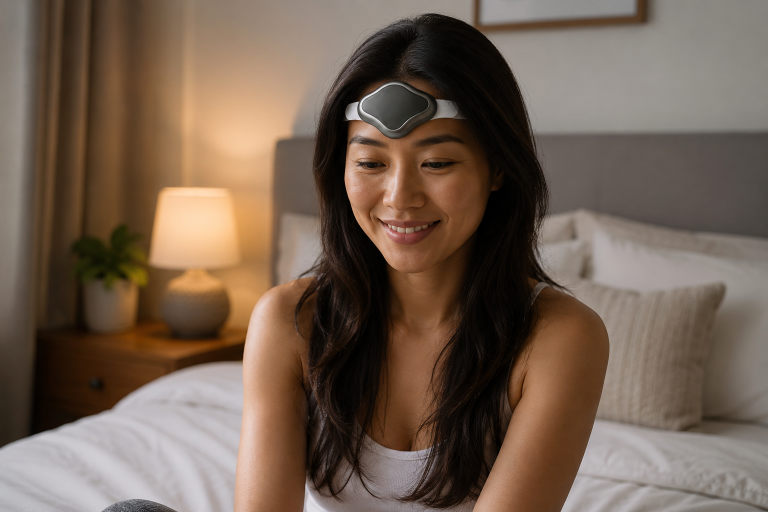
Cefaly uses external trigeminal nerve stimulation, or e-TNS. A self-adhesive electrode is positioned on the forehead, centered between and just above the eyebrows. The device delivers controlled electrical impulses to the upper branches of the trigeminal nerve, a central pathway involved in migraine pain.
The device offers two programs:
- Acute: A 60-minute session used during a migraine attack
- Prevent: A 20-minute session used daily for episodic migraine prevention
Explore the Cefaly mechanism and its treatment programs.
Key Features
- FDA-cleared acute treatment of migraine with or without aura in adults 18 and older
- FDA-cleared preventive treatment of episodic migraine in adults 18 and older
- Drug-free and non-invasive forehead treatment
- Prescription-free access in the U.S.
- Reusable device with replaceable electrodes
- No known medication interactions
- At-home treatment without routine office visits for device administration
- HSA/FSA eligibility, subject to plan rules
- App-based treatment tracking and migraine logging where available
Cefaly does not cure migraine, and individual results vary.
Cefaly Clinical Evidence
In the PREMICE preventive study, the active-treatment group reported a 32.7% reduction in monthly headache days after three months. The study also reported that 38.1% of participants achieved at least a 50% reduction in monthly migraine days and that acute migraine medication intake decreased by 36.6%.
In the ACME acute-treatment study, 79% of participants experienced significant headache pain reduction after one hour of e-TNS treatment, and 63% experienced a pain decrease of at least 50%.
These results describe outcomes from specific clinical studies and do not guarantee an individual result. Review Cefaly’s clinical studies for additional research information.
Safety and Contraindications
Cefaly clinical studies have reported no serious device-related adverse events. Reported side effects are generally minor and reversible after treatment stops. They can include:
- Sleepiness during or after treatment
- Headache after a session
- Forehead skin redness
- Nausea
- Skin irritation or rare forehead skin allergy
Do not use Cefaly if you have:
- Metallic or electronic implants in the head
- A cardiac pacemaker
- An implanted or wearable defibrillator
- Pain of unknown origin
Talk to your healthcare provider before using Cefaly if you are pregnant, breastfeeding, have a complex medical history, are changing medications, or are experiencing new or unusual symptoms.
Cost and Access
The Cefaly Connected device is currently listed at $509 in the U.S. Replacement electrodes are the primary recurring expense. Cefaly states that users can generally expect to spend approximately $350 to $450 per year on electrodes, depending on treatment frequency, electrode type, care, and storage.
Actual costs depend on current pricing, promotions, treatment frequency, electrode use, available discounts, and insurance or HSA/FSA reimbursement. Cefaly provides information about HSA/FSA eligibility and insurance coverage.
If you are not satisfied with Cefaly, you can return the device for a refund within 90 calendar days of your product delivery date when purchased directly from the official website. Review the complete return policy for current conditions.
Practical Considerations
Cefaly may appeal to adults who:
- Prefer a drug-free, non-invasive treatment format
- Want acute and preventive programs in one device
- Prefer at-home treatment without routine administration appointments
- Want an option without known medication interactions
- Value prescription-free access and a reusable-device model
- Want app-based migraine tracking where available
People with chronic migraine, uncertain headache symptoms, contraindications, or complex treatment histories should discuss Cefaly and other options with a qualified healthcare provider.
2. Aimovig
Aimovig (erenumab-aooe) is a prescription monoclonal antibody that blocks the CGRP receptor. It is used for the preventive treatment of migraine in adults.
Key Features
- Monthly subcutaneous injection
- Available in 70 mg and 140 mg doses
- Preventive treatment only
- Can be self-administered after appropriate instruction
- Requires a prescription
Aimovig may appeal to adults who prefer a monthly injection and whose healthcare provider considers CGRP-receptor blockade appropriate. Its prescribing information includes warnings and precautions related to constipation, hypertension, hypersensitivity, and Raynaud’s phenomenon. Treatment selection should account for medical history and current medications.
3. Ajovy
Ajovy (fremanezumab-vfrm) is a prescription monoclonal antibody that targets the CGRP ligand. It is used for the preventive treatment of migraine in adults. It is also approved for preventive treatment of episodic migraine in certain pediatric patients who meet the labeled age and weight requirements.
Key Features
- Subcutaneous injection
- Adult dosing of 225 mg monthly or 675 mg every three months
- Quarterly dosing requires three consecutive 225 mg injections
- Can be administered by a patient, caregiver, or healthcare provider after appropriate instruction
- Requires a prescription
Ajovy may appeal to adults who want a choice between monthly and quarterly dosing. Its prescribing information includes warnings and precautions related to hypersensitivity, constipation, hypertension, and Raynaud’s phenomenon. A healthcare provider can determine whether the dosing schedule and injection format fit an individual’s treatment plan.
4. Emgality
Emgality (galcanezumab-gnlm) is a prescription monoclonal antibody that targets the CGRP pathway. It is used for the preventive treatment of migraine in adults and has a separate indication for episodic cluster headache.
Key Features
- Subcutaneous injection
- Migraine treatment begins with a 240 mg loading dose
- Followed by a 120 mg dose every month
- Intended for patient self-administration after appropriate instruction
- Requires a prescription
Emgality may appeal to adults who prefer a monthly self-injected preventive medicine. Its prescribing information includes warnings and precautions related to hypersensitivity, constipation, hypertension, and Raynaud’s phenomenon. The loading dose, ongoing schedule, medical history, and other treatments should be reviewed with a healthcare provider.
5. Vyepti
Vyepti (eptinezumab-jjmr) is a prescription monoclonal antibody that targets the CGRP pathway. It is used for the preventive treatment of migraine in adults and is administered by intravenous infusion.
Key Features
- Intravenous infusion in a medical setting
- Recommended dose of 100 mg every three months
- Some patients may receive 300 mg every three months
- Infusion is administered over approximately 30 minutes
- Requires a prescription
Vyepti may appeal to adults who prefer an infusion administered once every three months rather than self-injection. Its prescribing information includes warnings and precautions related to hypersensitivity, constipation, hypertension, and Raynaud’s phenomenon. Treatment requires access to an infusion setting and ongoing clinical oversight.
6. Nerivio
Nerivio is a prescription remote electrical neuromodulation device worn on the upper arm. It is indicated for the acute and preventive treatment of migraine with or without aura in patients eight years of age and older.
Key Features
- Drug-free remote electrical neuromodulation
- Worn on the upper arm
- 45-minute treatment sessions
- Used at attack onset for acute treatment or every other day for prevention
- Controlled through a compatible mobile application
- Requires a prescription
Nerivio may appeal to people who prefer an app-controlled wearable placed away from the head. The device is self-administered at home, but its labeling includes specific warnings, precautions, and populations in which it has not been evaluated. Treatment suitability should be reviewed with the prescribing healthcare provider.
7. gammaCore
gammaCore is a prescription handheld device that delivers non-invasive vagus nerve stimulation through the skin on the side of the neck. It is indicated for acute and preventive migraine treatment in adolescents 12 and older and adults, along with several other headache-related indications.
Key Features
- Drug-free non-invasive vagus nerve stimulation
- Applied to the side of the neck
- Handheld and portable device format
- Uses brief two-minute stimulations within treatment routines
- Supports both acute and preventive migraine treatment
- Requires a prescription
gammaCore may appeal to people who prefer a portable, neck-applied device. Its contraindications include active implantable medical devices, and its safety information identifies additional medical situations requiring caution or professional review. A healthcare provider should determine the appropriate dosing routine and whether the device is suitable.
8. Relivion MG
Relivion MG is a prescription, head-worn neuromodulation device that stimulates trigeminal and occipital nerve pathways. It is indicated for the acute treatment of migraine with or without aura in adults 18 and older.
Key Features
- Drug-free electrical neuromodulation
- Head-worn treatment format
- Stimulates front and back head regions
- Acute migraine treatment only under its current U.S. indication
- Designed for self-use at home
- Requires a prescription
Relivion MG may appeal to adults who prefer a head-worn device for treating individual migraine attacks. It should not be presented as FDA-cleared for migraine prevention. Its user instructions include contraindications and precautions related to implants, recent head or facial trauma, skin conditions, and other medical factors.
9. Enso for Migraine
Enso for Migraine is an over-the-counter, app-controlled electrical nerve stimulation device worn on the forehead. It is indicated for acute treatment of migraine with or without aura and preventive treatment of migraine in adults 18 and older who have been diagnosed with migraine by a physician.
Key Features
- Over-the-counter electrical neuromodulation device
- Applied to the center of the forehead
- Supports acute and preventive migraine treatment
- Controlled through a compatible mobile application
- Uses reusable hardware and replaceable hydrogel pads
- Does not require a prescription
Enso for Migraine may appeal to adults seeking an app-controlled, prescription-free forehead device. Its regulatory clearance does not remove the importance of reviewing the complete instructions, contraindications, treatment schedule, product access requirements, and ongoing supply needs before use.
10. Nutraceuticals and Supplements
Magnesium, riboflavin, and coenzyme Q10 are among the supplements commonly discussed in migraine prevention. These products are widely available, but formulations, evidence, dosing, quality, and individual suitability vary.
Key Features
- Oral, non-prescription format
- Common options include magnesium, riboflavin, and coenzyme Q10
- Primarily considered for preventive support rather than acute treatment
- Product quality and ingredient amounts vary by manufacturer
- May interact with medicines or be unsuitable for certain health conditions
Supplements may appeal to people who prefer an oral, non-prescription approach. They are not risk-free, and a healthcare provider or pharmacist can help identify potential interactions, contraindications, and an appropriate formulation. For additional background, review the migraine supplements guide.
11. Behavioral Therapies
Behavioral therapies can support migraine management by addressing stress responses, coping patterns, sleep habits, and the effects of living with recurrent pain. They may be used alongside medications, devices, and other preventive approaches.
Key Features
- May include cognitive behavioral therapy
- Can include relaxation training and biofeedback
- May be delivered in person, by telehealth, or through guided programs
- Does not involve medication or a medical device
- Usually requires repeated practice or structured sessions
Behavioral therapy may appeal to people seeking skills-based support within a broader migraine plan. Access, cost, therapist qualifications, and treatment format vary. A healthcare provider can help determine how these approaches may fit alongside other care. Learn more about therapy and migraine.
12. Acupuncture
Acupuncture is a practitioner-administered complementary approach that involves inserting thin needles at selected points on the body. Some people include it within a broader migraine management plan.
Key Features
- Performed by a trained practitioner
- Uses thin needles at selected body points
- Generally delivered through a series of appointments
- Does not require prescription medication
- Cost and insurance coverage vary
Acupuncture may appeal to people interested in a practitioner-led complementary approach. People considering it should use a qualified professional and discuss relevant medical factors, including pregnancy, bleeding risk, and blood-thinning medication, with a healthcare provider. Read more about acupuncture for migraine.
13. Lifestyle and Trigger Management
Lifestyle and trigger-management strategies can provide a foundation for a broader migraine plan. They do not replace indicated medical treatment, but consistent routines may help people and their providers identify patterns associated with attacks.
Key Features
- Consistent sleep and wake schedules
- Regular meals and adequate hydration
- Gradual, appropriate physical activity
- Stress-management and relaxation practices
- Tracking of personal triggers, attacks, treatments, and functional impact
Lifestyle support may appeal to anyone seeking a structured foundation for migraine management. A migraine diary can help document trends involving sleep, food, weather, hormones, light, sound, stress, and treatment use. The Cefaly app supports treatment tracking and migraine logging where available, while a paper diary or another tracking method can also be used.
Comparing Botox Alternatives
Botox alternatives are best compared through indication, treatment format, access, treatment location, and ongoing requirements rather than cross-trial efficacy or safety rankings.
Treatment Format
- Cefaly: Reusable forehead-worn e-TNS device with Acute and Prevent programs
- Aimovig, Ajovy, and Emgality: Prescription subcutaneous preventive injections
- Vyepti: Prescription preventive IV infusion
- Nerivio: Prescription upper-arm remote electrical neuromodulation device
- gammaCore: Prescription handheld vagus nerve stimulation device applied to the neck
- Relivion MG: Prescription head-worn device for acute migraine treatment
- Enso for Migraine: Over-the-counter app-controlled forehead stimulation device
- Supplements: Oral products used with appropriate professional guidance
- Behavioral therapy: Structured skills-based sessions or guided programs
- Acupuncture: Practitioner-administered needle treatment
- Lifestyle support: Ongoing daily routines and trigger tracking
Access
Cefaly and Enso for Migraine are available without a prescription in the U.S. Aimovig, Ajovy, Emgality, Vyepti, Nerivio, gammaCore, and Relivion MG require a prescription. Actual access may also depend on age, diagnosis, insurance, prior authorization, geographic availability, pharmacy or infusion services, and manufacturer distribution models.
Treatment Location
Cefaly, Nerivio, gammaCore, Relivion MG, and Enso for Migraine are designed for self-use outside a clinic when used according to their instructions. Aimovig, Ajovy, and Emgality may be self-injected after appropriate instruction. Vyepti requires an infusion setting, while Botox is administered by a trained healthcare professional. Behavioral therapy may be delivered in person or by telehealth, and acupuncture is generally performed by a qualified practitioner.
Frequently Asked Questions
What are the main differences between Botox and Cefaly?
Botox is a prescription treatment administered by a healthcare professional for the prevention of headaches in adults with chronic migraine. Treatments are generally repeated every 12 weeks. Cefaly is a non-invasive e-TNS device used on the forehead at home. It provides a 60-minute Acute program for migraine attacks and a 20-minute daily Prevent program for episodic migraine prevention in adults 18 and older. Cefaly is available without a prescription in the U.S.
How long does Cefaly take to work?
The Acute program is a 60-minute treatment used during a migraine attack. Cefaly recommends starting it at the earliest sign of an attack. For prevention, the 20-minute Prevent program should be used daily. Cefaly advises allowing at least two to three months of consistent use to evaluate preventive results. Individual response varies.
Does Cefaly have serious side effects?
Cefaly clinical studies have reported no serious device-related adverse events. Reported side effects are generally minor and reversible and can include sleepiness, post-session headache, forehead redness, nausea, skin irritation, or rare skin allergy. It should not be used by people with metallic or electronic implants in the head, a cardiac pacemaker, an implanted or wearable defibrillator, or pain of unknown origin.
Can Cefaly be used with migraine medication?
Cefaly has no known medication interactions and can be used alongside other migraine treatments. In the PREMICE study, acute migraine medication intake decreased by 36.6% after three months of Prevent treatment. This was a study outcome and does not mean every user will reduce medication use. Any medication change should be discussed with a healthcare provider.
Is Cefaly covered by insurance?
Direct insurance coverage varies by plan. Cefaly is HSA/FSA eligible, subject to account rules, and financing options may be available. Review current payment options and confirm benefits with the applicable plan administrator.
Where is the Cefaly electrode placed?
The electrode is placed on clean, dry skin on the forehead, centered between and just above the eyebrows. The device attaches magnetically to the electrode. Users should follow the official setup and placement instructions provided with their device and in the new user guide.
Can Cefaly be used for chronic migraine?
Cefaly’s FDA-cleared preventive indication is for episodic migraine in adults 18 and older. Cefaly has also published research involving chronic migraine, but that research does not change the device’s cleared preventive indication. People with chronic migraine should speak with a healthcare provider about whether Cefaly may have a role in their broader treatment plan and which therapies are appropriate for their diagnosis.






Latest Posts

The Essential Guide To Medical Devices For Migraine
CEFALY is an FDA-cleared medical device that targets the main pathway for migraine pain: the trigeminal nerve (the…
Best Forehead Migraine Device in 2026
Migraine affects more than 40 million people in the United States. For adults who want a non-invasive option…

Best e-TNS Migraine Device in 2026
Migraine is a neurological disease that can affect work, sleep, family life, and daily routines. For people who…