



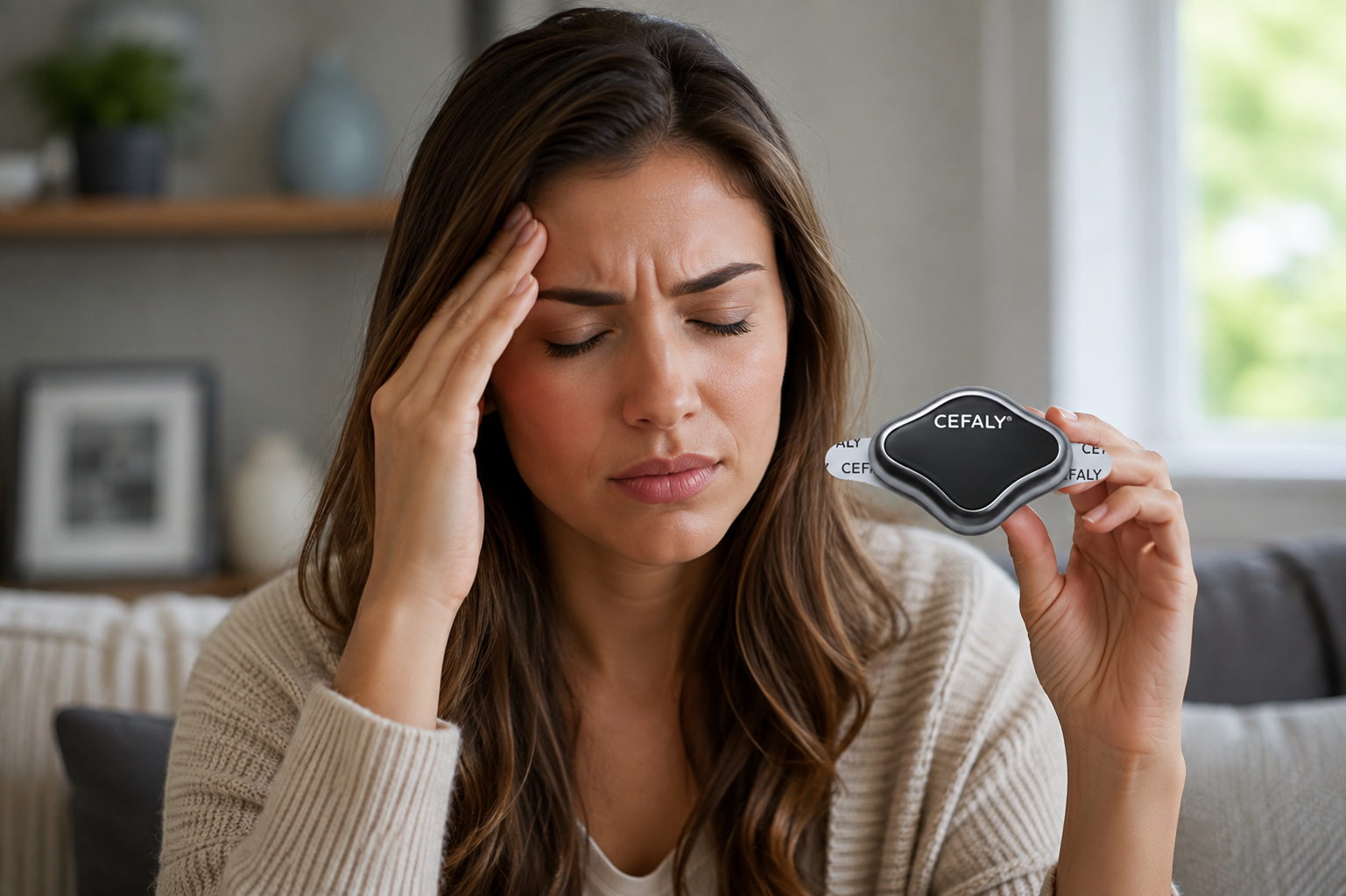
Best Drug-Free Migraine Treatments for People Who Can’t Tolerate Medication in 2026
Migraine affects about 40 million Americans, and medication is not the right fit for everyone. Some people experience difficult side effects, have contraindications or interaction concerns, are managing pregnancy-related treatment decisions, or want to reduce reliance on acute medication as part of a broader care plan.
Drug-free migraine care can include FDA-cleared neuromodulation devices, behavioral treatment, structured tracking, consistent lifestyle routines, and supportive comfort measures. These approaches differ in their intended use, age indication, access requirements, treatment schedule, and safety information.
Cefaly stands out as the best overall option in this guide for many adults who prioritize prescription-free access, one reusable device for both acute and preventive treatment, Cefaly-specific clinical research, and an established support ecosystem. Cefaly became the first FDA-cleared neuromodulation device for migraine prevention in 2014 and received FDA clearance for acute migraine treatment in 2017.
Cefaly does not cure migraine, permanently eliminate attacks, or guarantee a specific result. A healthcare provider can help determine how any drug-free option fits into an individualized migraine treatment plan.
Key Takeaways
- Cefaly is the best overall fit for many adults seeking a reusable, prescription-free device for acute and preventive migraine treatment.
- Neuromodulation devices are not interchangeable. They use different nerve targets, treatment formats, age indications, and access models.
- Cefaly provides two programs: a 60-minute Acute session and a 20-minute daily Prevent session.
- Cefaly is not the only OTC dual-use device. Enso for Migraine received FDA clearance in April 2026 for acute and preventive treatment in adults, although current access is tied to eligible Hinge Health programs.
- Drug-free does not mean risk-free. Each device has specific warnings, contraindications, and instructions for use.
- Lifestyle and behavioral strategies can complement treatment but should not be presented as guaranteed substitutes for appropriate medical care.
Best Drug-Free Migraine Devices in 2026
The devices below are organized using practical factors such as cleared use, prescription status, treatment placement, age indication, and at-home usability. Competitor clinical trials are not compared because study designs and endpoints differ.
1) Cefaly
Best For: Adults seeking a reusable, prescription-free device for both acute and preventive migraine treatment
FDA-Cleared Use: Acute treatment of migraine with or without aura and preventive treatment | Adults 18+
Prescription: Not required
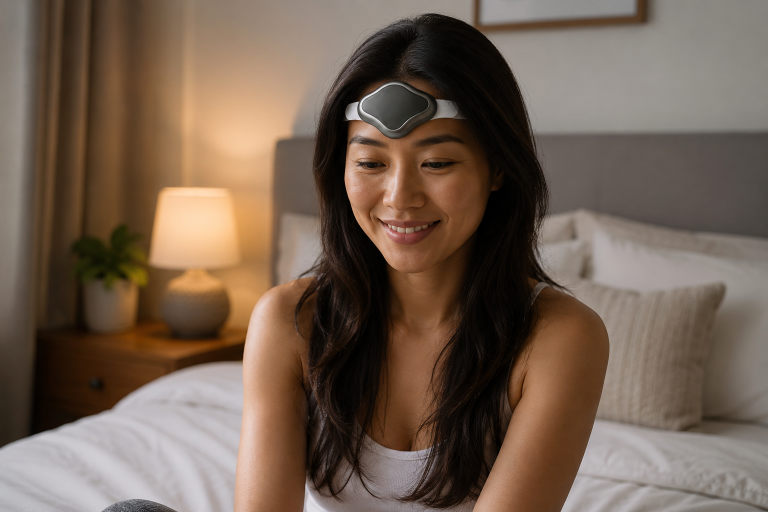
Cefaly uses external trigeminal nerve stimulation, or e-TNS. The reusable device attaches magnetically to an adhesive electrode positioned on the forehead, between and just above the eyebrows. It delivers controlled electrical impulses through the skin to stimulate branches of the trigeminal nerve, a major pathway involved in migraine pain.
Cefaly includes a 60-minute Acute program for use during a migraine attack and a 20-minute daily Prevent program for preventive treatment. According to Cefaly clinical studies, the device has been evaluated across more than 20 years of research, more than 12 clinical trials, 18 peer-reviewed publications, and three pivotal prospective, multicenter, sham-controlled randomized trials.
Key Features
- Prescription-free access for eligible adults in the U.S., Canada, the EU, and other supported markets
- Acute and preventive treatment programs in one reusable device
- Forehead placement that directly targets branches of the trigeminal nerve
- 60-minute Acute program and 20-minute daily Prevent program
- Cefaly-specific acute and preventive clinical research
- Optional app-based controls, treatment tracking, and supported wearable integrations where available
- Free one-on-one coaching in supported regions
- 90-day satisfaction guarantee for eligible direct purchases
- HSA/FSA eligibility and financing options for eligible U.S. customers
Cefaly Connected is currently listed at $509 on the U.S. website. Replacement electrodes are the primary ongoing product cost, and optional electrode auto-delivery is available. The Cefaly app, Cefaly Connected device, and coaching services are not currently available in the EU.
Cefaly may be especially relevant for adults who want direct online access without a prescription, prefer one device for both treatment goals, and value clinical research, app support, coaching, and a 90-day return policy. Individual results vary.
2) Nerivio
Best For: Children ages 8 and older, adolescents, and adults who prefer an upper-arm wearable
FDA-Cleared Use: Acute and preventive migraine treatment | Ages 8+
Prescription: Required
Nerivio uses remote electrical neuromodulation, or REN. The wearable is placed on the upper arm and controlled through a smartphone app. It is used for a 45-minute session at the onset of a migraine attack or every other day for preventive treatment.
Key Features
- Upper-arm placement rather than forehead or neck placement
- Acute and preventive treatment in one prescription device
- Cleared for patients ages 8 and older
- Smartphone-controlled intensity and treatment sessions
- Current Nerivio Infinity format uses a rechargeable controller with replaceable treatment refill units
- Prescription fulfillment and coverage support may be available through the manufacturer and participating pharmacies
Nerivio may be relevant when pediatric eligibility, discreet arm placement, or app-based treatment is the main priority. A healthcare provider must prescribe the device and determine whether it is appropriate for the patient.
3) gammaCore
Best For: Adolescents and adults who prefer a portable, handheld device applied to the side of the neck
FDA-Cleared Use: Acute and preventive migraine treatment | Ages 12+
Prescription: Required
gammaCore delivers noninvasive vagus nerve stimulation, or nVNS, through the side of the neck. Migraine protocols use consecutive two-minute stimulations, with the number and timing determined by whether the device is being used for acute or preventive treatment and by the applicable instructions from the prescriber.
Key Features
- Handheld, rechargeable device applied to the side of the neck
- Acute and preventive migraine treatment in one prescription device
- Cleared for adolescents ages 12 and older and adults
- Short, two-minute stimulation cycles
- Preventive treatment generally follows morning and evening sessions
- Additional FDA-cleared indications for certain other headache disorders
- Manufacturer prescribing and customer-support pathways
gammaCore may be relevant for patients who prefer brief neck-applied stimulation and whose healthcare provider considers vagus nerve stimulation appropriate. Treatment protocols vary by indication, so users should follow the current device instructions and their prescriber’s guidance.
4) SAVI Dual
Best For: Adolescents and adults who prefer magnetic stimulation without adhesive forehead electrodes
FDA-Cleared Use: Acute and preventive migraine treatment | Ages 12+
Prescription: Required
SAVI Dual is a single-pulse transcranial magnetic stimulation, or sTMS, device. It is positioned at the back of the head and delivers brief magnetic pulses according to a healthcare provider’s prescribed acute or preventive treatment protocol.
Key Features
- Magnetic stimulation rather than skin-level electrical stimulation
- Positioned at the back of the head
- Acute and preventive treatment in one prescription device
- Cleared for adolescents ages 12 and older and adults
- Self-administered use at home or away from home
- No adhesive forehead electrode
- SAVI Smart Diary automatically records treatment history
- Access is generally structured through a renewable prescription or monthly therapy program
SAVI Dual may be relevant for patients who prefer a pulse-based magnetic device and do not want an adhesive electrode or neck-applied treatment. A healthcare provider must prescribe the device and determine the pulse protocol for the individual patient.
5) Relivion MG
Best For: Adults seeking a prescription headset designed specifically for acute migraine treatment
FDA-Cleared Use: Acute treatment of migraine with or without aura | Adults 18+
Prescription: Required
Relivion MG is a headset-style transcutaneous electrical nerve stimulation device. It uses three pairs of electrodes positioned around the forehead and back of the head to stimulate trigeminal and occipital nerve branches during a migraine attack.
Key Features
- Headset-style placement across frontal and occipital nerve regions
- Cleared specifically for acute migraine treatment
- Designed for adults ages 18 and older
- Treatment sessions can run for up to 60 minutes
- Rechargeable device with replaceable electrode pads
- Optional mobile app for treatment status, tracking, and migraine diary functions
- Prescription access through participating providers or a telehealth pathway
- Current U.S. access begins with a structured 60-day therapy program
Relivion MG may be relevant for adults who want a head-worn device for acute attacks and are comfortable with a prescription-based access program. It is not FDA-cleared for migraine prevention, so patients seeking a dual-use device should consider that distinction.
6) Enso for Migraine
Best For: Adults with access through an eligible employer or health plan offering Hinge Health Migraine Care
FDA-Cleared Use: Acute and preventive migraine treatment | Adults 18+
Prescription: Not required under its FDA clearance
Enso for Migraine is an over-the-counter, app-controlled wearable system that uses transcutaneous electrical nerve stimulation delivered through a gel pad attached to the skin. The FDA cleared the device on April 16, 2026, for acute treatment of migraine with or without aura and preventive treatment in adults diagnosed with migraine by a physician.
Key Features
- Over-the-counter FDA clearance for adults
- Acute and preventive migraine treatment
- App-controlled wearable stimulation
- Gel-pad placement rather than a forehead, neck, or headset format
- Integrated access to tracking, exercise therapy, and clinician support within Hinge Health’s program
- Current availability depends on employer, health-plan, or program eligibility
Enso may be relevant for adults whose health benefits include Hinge Health Migraine Care and who prefer a program that combines a wearable device with digital tracking and clinician-guided support. Although the device has OTC clearance, current consumer access is not the same as broadly purchasing a device directly from a retail website.
7) HeadaTerm 2
Best For: Adults researching a lower-cost, over-the-counter forehead device for episodic migraine prevention
FDA-Cleared Use: Preventive treatment of episodic migraine | Adults 18+
Prescription: Not required
HeadaTerm 2 is a rechargeable forehead-worn transcutaneous electrical nerve stimulation device. It delivers adjustable electrical impulses through an adhesive electrode to stimulate the supraorbital and supratrochlear nerve regions.
Key Features
- Over-the-counter access
- Forehead placement
- Preventive treatment for episodic migraine
- Cleared for adults ages 18 and older
- Rechargeable, reusable device
- Adjustable stimulation intensity
- Replaceable adhesive electrodes
- Lower listed purchase price than several prescription neuromodulation programs
HeadaTerm 2 may be relevant for adults focused specifically on episodic migraine prevention and a lower initial device price. Its FDA-cleared indication is preventive rather than acute, so it does not provide the same dual acute-and-preventive treatment format as Cefaly.
How Cefaly Compares on Practical Factors
Cefaly’s strongest distinction is not that it is the only prescription-free migraine device. Rather, it combines several verified features in one established system:
- Direct access: Eligible adults can order Cefaly without completing a prescription step.
- Dual functionality: Acute and Prevent programs are included in one reusable device.
- Treatment schedule: Acute treatment uses a 60-minute session, while preventive treatment uses 20 minutes daily.
- Research history: Cefaly reports more than 20 years of research, more than 12 clinical trials, and 18 peer-reviewed publications.
- Support resources: Users can access the app, free coaching, customer support, and certified providers in supported regions.
- Ownership model: The device is purchased rather than activated through a recurring prescription period, although replacement electrodes remain an ongoing cost.
- Direct-purchase protection: Eligible official-site purchases are covered by the return policy.
These practical factors may make Cefaly the most complete fit for adults who want a prescription-free, reusable dual-use system. They should not be interpreted as proof that Cefaly will produce better clinical outcomes than every alternative for every patient.
Understanding Migraine Patterns and Triggers
Migraine is a neurological disease, and triggers do not cause the underlying condition. However, certain internal and environmental factors may contribute to attacks in some people.
Commonly reported patterns include:
- Food and beverages: Alcohol, caffeine changes, skipped meals, or individually sensitive foods
- Environmental factors: Bright light, strong odors, weather changes, or barometric pressure shifts
- Hormonal changes: Menstrual cycles, perimenopause, pregnancy, or hormone therapy
- Daily routines: Irregular sleep, dehydration, stress, or missed meals
- Physical factors: Intense exertion, prolonged screen exposure, or muscle tension
Keeping a diary can help identify personal patterns without assuming that every suspected trigger must be eliminated. The Cefaly app can log attacks, warning signs, symptoms, triggers, and treatments. It can also integrate supported data from Apple Health, Google Health, Fitbit, Oura, Garmin, and other compatible platforms.
The Cefaly Migraine Relief app, Cefaly Connected device, and coaching services are available only in supported regions and are not currently available in the EU. People without access to the app can still use a written diary or another migraine tracking method.
At-Home Comfort Measures During an Attack
Supportive measures may make a migraine attack easier to tolerate, but they do not replace individualized medical care or a treatment recommended by a healthcare provider.
Temperature and Rest
Some people find relief from a cool compress on the forehead or neck. Others prefer gentle warmth for tight neck or shoulder muscles. Resting in a dark, quiet, low-odor environment may also reduce exposure to light, sound, and scent sensitivity.
Light Management
Reducing screen brightness, limiting visual stimulation, or using migraine glasses may help people who are sensitive to light. Results vary, and migraine glasses are not a substitute for medical treatment.
Hydration and Caffeine
Regular hydration and meals can support a consistent migraine routine. Caffeine may help some people during an attack but may trigger symptoms, withdrawal headaches, or overuse-related problems in others. Learn more about caffeine and migraine.
Massage and Acupressure
Gentle massage or pressure points may feel soothing for some people, although evidence and individual response vary. Stop any technique that increases pain or causes new symptoms.
Cefaly’s 60-minute Acute session can be started at the earliest sign of an attack, according to the device instructions. Because Cefaly is drug-free, it does not create pharmacologic drug-drug interactions.
Lifestyle Strategies for Migraine Management
Regular routines can support migraine management, although no lifestyle strategy prevents every attack. A healthcare provider can help identify realistic changes based on a person’s health, disability, and migraine pattern.
Sleep Consistency
- Keep sleep and wake times as consistent as practical.
- Create a dark, comfortable sleep environment.
- Limit major changes in sleep duration when possible.
- Discuss persistent insomnia, snoring, or other sleep concerns with a healthcare provider.
Learn more about sleep and migraine.
Stress Management
Relaxation and behavioral approaches may help some people manage stress and migraine burden. Options can include biofeedback, paced breathing, meditation practice, and yoga for migraine.
Exercise and Hydration
Regular, appropriately paced physical activity may support general health and migraine management. Begin gradually, prepare for heat or exertion, and review hydration strategies when needed. People whose symptoms worsen with exercise should discuss this pattern with a healthcare provider.
Nutritional Supplements
Magnesium, riboflavin, coenzyme Q10, and feverfew are among the supplements sometimes discussed for migraine prevention. Evidence, formulations, doses, side effects, and interactions vary. Review any migraine supplements with a qualified healthcare provider before use, particularly during pregnancy or breastfeeding or when taking other medications.
Drug-Free Migraine Care During Pregnancy and Breastfeeding
Migraine treatment during pregnancy and breastfeeding requires individualized medical guidance. Do not stop, start, or change medication solely because another option is described as drug-free or natural.
Cefaly states that many women have used the device during pregnancy without known serious adverse effects. However, its safety and effectiveness have not been specifically evaluated in pregnant women. People who are pregnant, may become pregnant, or are breastfeeding should speak with a healthcare provider before use.
Cefaly also maintains a pregnancy registry to gather information about non-medication migraine options during pregnancy.
Other supportive strategies may include consistent sleep, regular hydration and meals, stress management, trigger tracking, and clinician-directed physical therapy when appropriate.
Frequently Asked Questions
What is the best drug-free migraine device for adults?
There is no single device that is best for every patient. Cefaly stands out as the best overall fit in this guide for many adults because it is prescription-free, reusable, FDA-cleared for acute and preventive treatment, supported by Cefaly-specific research, and accompanied by app, coaching, and provider resources in supported regions.
Is Cefaly the only over-the-counter migraine device?
No. Cefaly is available without a prescription, but it is not the only OTC FDA-cleared migraine device. Enso for Migraine received OTC clearance in April 2026 for acute and preventive treatment in adults, and HeadaTerm 2 is available OTC for preventive treatment of episodic migraine in adults.
What is the primary mechanism behind Cefaly treatment?
Cefaly delivers controlled electrical impulses through a forehead electrode to stimulate branches of the trigeminal nerve, a major pathway involved in migraine pain. Its Acute and Prevent programs use external trigeminal nerve stimulation for two different treatment routines.
How quickly can Cefaly provide acute migraine relief?
The Acute program runs for 60 minutes. In the ACME study, 79% of patients experienced a significant reduction in headache pain after one hour of Cefaly Acute treatment. Individual results vary, and relief is not guaranteed. For best results, start the Acute program at the earliest sign of an attack and follow the current user manual.
Are there side effects associated with Cefaly?
Cefaly clinical studies report no serious adverse effects associated with treatment. Reported effects are generally minor and reversible and may include sleepiness, headache after a session, forehead redness, nausea, or rare skin allergy or sensitivity.
Can Cefaly be used with migraine medication?
Because Cefaly is drug-free, it does not create pharmacologic drug-drug interactions. It may be used as a standalone option or as part of a broader migraine treatment plan. A healthcare provider should guide medication changes and help determine how treatments fit together.
How does tracking support drug-free migraine management?
Tracking attacks, symptoms, warning signs, treatments, sleep, activity, and possible triggers can reveal personal patterns over time. The Cefaly app can combine migraine logs with supported wearable data and generate reports to share with a healthcare provider where the app is available.
Does Cefaly cure migraine?
No. Cefaly is designed to treat migraine attacks and support preventive treatment, but it does not cure migraine or guarantee that attacks will stop. Consistent use and an individualized care plan remain important.




Latest Posts

The Essential Guide To Medical Devices For Migraine
CEFALY is an FDA-cleared medical device that targets the main pathway for migraine pain: the trigeminal nerve (the…
Best Forehead Migraine Device in 2026
Migraine affects more than 40 million people in the United States. For adults who want a non-invasive option…

Best e-TNS Migraine Device in 2026
Migraine is a neurological disease that can affect work, sleep, family life, and daily routines. For people who…