



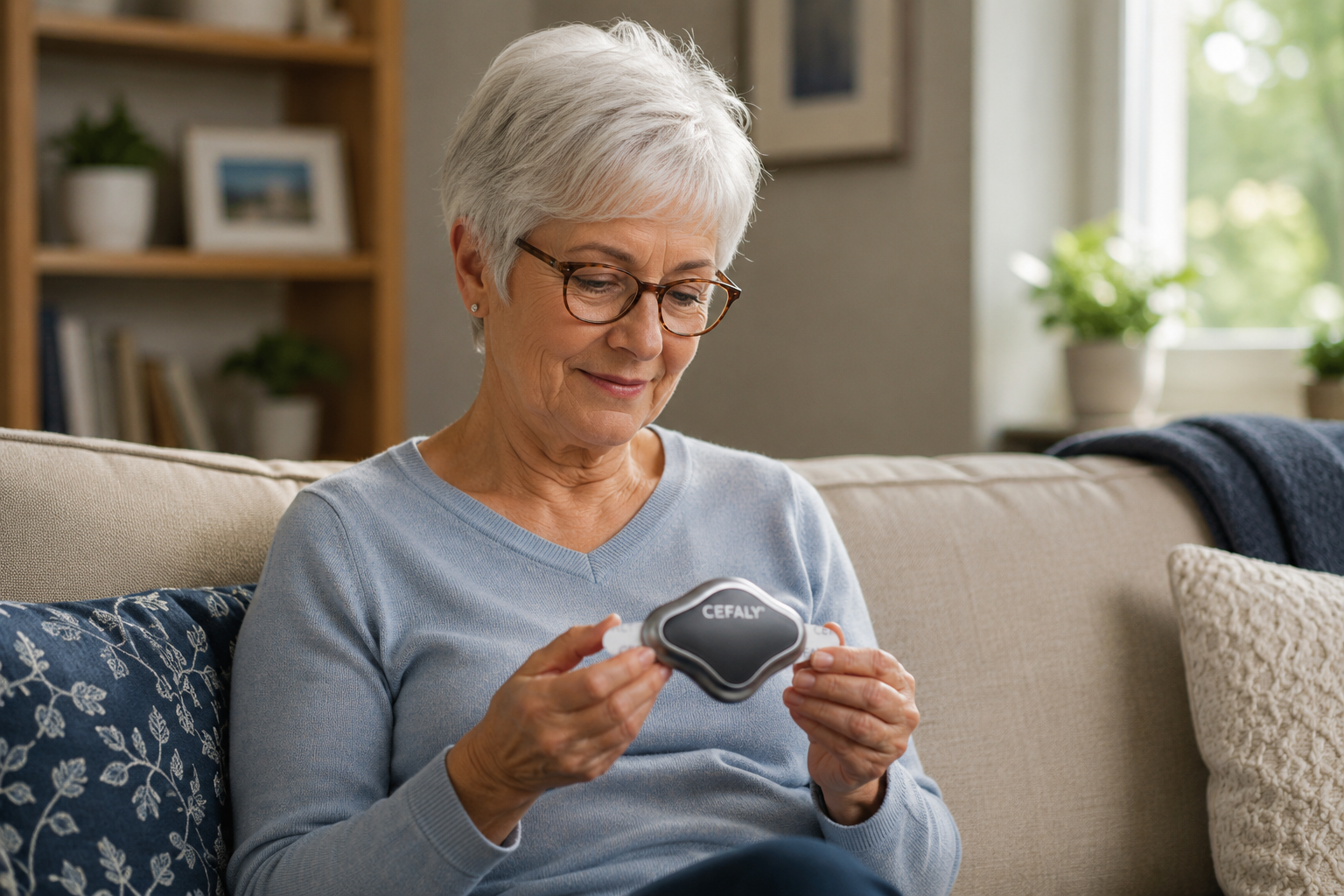
Best Non-Invasive Migraine Devices in 2026
Migraine affects more than 1 billion people worldwide. For people who want a drug-free treatment option or an additional tool alongside medication, non-invasive neuromodulation devices provide several FDA-cleared approaches for acute treatment, prevention, or both.
Cefaly became the first FDA-cleared migraine treatment device for migraine prevention in 2014, received FDA clearance for acute migraine treatment in 2017, and became available over the counter in the U.S. in 2020. The market has continued to expand, including the 2026 clearance of Enso for Migraine for over-the-counter acute and preventive treatment in adults.
This guide covers seven notable FDA-cleared devices and compares their cleared use, age indication, prescription status, placement, treatment routine, and access. It does not use percentages from separate competitor trials to rank clinical effectiveness because different studies are not designed for direct comparison.
Key Takeaways
- Several device formats are available: Options include forehead-worn stimulation, an upper-arm wearable, neck stimulation, back-of-head magnetic stimulation, and multi-electrode head-worn systems.
- OTC-cleared options now include Cefaly, HeadaTerm 2, and Enso for Migraine: Their cleared indications, treatment formats, and current access pathways differ.
- Cefaly treats and prevents migraine: Cefaly provides FDA-cleared acute treatment of migraine with or without aura and preventive treatment of episodic migraine in adults through one reusable, prescription-free e-TNS device.
- Pediatric indications vary: Nerivio is cleared for patients ages 8 and older, while gammaCore and SAVI Dual include patients ages 12 and older.
- Safety is device-specific: Contraindications, warnings, possible adverse effects, and appropriate treatment combinations should be reviewed for the individual device.
Understanding Non-Invasive Migraine Treatment
Non-invasive neuromodulation devices deliver electrical or magnetic stimulation without surgery. Depending on the device, stimulation may be applied to nerves in the forehead, arm, neck, or head or delivered as a magnetic pulse to the back of the head.
These devices do not introduce medication-based drug-drug interactions, but drug-free does not mean appropriate for every person. Device selection should account for the cleared indication. age requirements, treatment routine, placement, prescription status, contraindications, and access.
Common Neuromodulation Approaches
- External trigeminal nerve stimulation (e-TNS): Stimulates branches of the trigeminal nerve through a forehead electrode.
- Remote electrical neuromodulation (REN): Stimulates peripheral nerves in the upper arm to engage pain-regulation pathways.
- Non-invasive vagus nerve stimulation (nVNS): Applies stimulation to the vagus nerve through the side of the neck.
- Single-pulse transcranial magnetic stimulation (sTMS): Delivers brief magnetic pulses to the back of the head.
- Combined trigeminal-occipital stimulation: Uses a head-worn system to stimulate trigeminal and occipital nerve branches.
- Transcutaneous electrical nerve stimulation (TENS): Delivers electrical stimulation through electrodes placed on the skin.
1) Cefaly
Best For: Adults seeking prescription-free acute migraine treatment and daily episodic migraine prevention in one reusable device
FDA-Cleared Use: Acute treatment of migraine with or without aura and preventive treatment of episodic migraine | Adults 18+
Prescription: Not required in the U.S.
Cefaly uses e-TNS to stimulate the supraorbital and supratrochlear branches of the trigeminal nerve through an electrode positioned on the forehead, between and just above the eyebrows. It provides two dedicated treatment programs in one device.
Key Features
- 60-minute Acute program for use during a migraine attack
- 20-minute daily Prevent program for episodic migraine prevention
- Reusable device with replaceable adhesive electrodes
- Prescription-free access in the U.S., Canada, the EU, and other regions, subject to regional product availability
- Eligible for HSA/FSA funds in the U.S., subject to plan rules
- 90-day guarantee for eligible products purchased directly from Cefaly
- App-based treatment control, migraine tracking, reports, and supported wearable integrations where available
- Free one-on-one coaching in supported regions
Cefaly Clinical Evidence
Cefaly’s clinical studies include more than 20 years of research and 12 clinical trials. In the ACME study, 79% of participants experienced a significant reduction in headache pain after one hour of Acute treatment. In the PREMICE study, 38.1% of compliant participants achieved at least a 50% reduction in monthly migraine days after three months of preventive treatment.
Cefaly clinical studies report no serious adverse effects associated with Cefaly treatment. Reported side effects are generally minor and reversible after treatment is stopped.
Why Cefaly Ranks First
Cefaly combines acute and preventive treatment in one reusable, prescription-free device for adults. Its direct-purchase model, dedicated treatment programs, established clinical research, replaceable-electrode design, and support resources make it the strongest overall option for adults prioritizing accessibility and long-term use.
In supported regions, Cefaly Connected pairs through Bluetooth with the Cefaly app for treatment control, migraine tracking, personalized reports, and supported health-wearable integrations. Free Cefaly Coach sessions are also available in supported regions. Cefaly states that the app, Cefaly Connected device, and coaching services are not yet available in the EU.
2) Nerivio
Best For: Children ages 8 and older, adolescents, and adults who prefer an upper-arm wearable
FDA-Cleared Use: Acute and preventive migraine treatment with or without aura | Ages 8+
Prescription: Required
Nerivio uses remote electrical neuromodulation, or REN. The wearable is placed on the upper arm and controlled through a smartphone app. It is used for a 45-minute session at the onset of a migraine attack or every other day for preventive treatment.
Key Features
- Upper-arm placement rather than forehead, neck, or back-of-head placement
- Acute and preventive treatment in one prescription device
- Cleared for patients ages 8 and older
- Smartphone-controlled treatment sessions and intensity
- Nerivio Infinity uses a rechargeable controller with replaceable treatment refill units
- Prescription fulfillment and coverage support may be available through the manufacturer and participating pharmacies
Nerivio may be relevant when pediatric eligibility, discreet arm placement, or app-based treatment is the main priority. A healthcare provider must prescribe the device and determine whether it is appropriate for the patient.
3) gammaCore Sapphire
Best For: Adolescents and adults considering neck-applied stimulation for migraine or additional headache indications
FDA-Cleared Use: Acute and preventive migraine treatment | Ages 12+; additional cleared headache indications apply
Prescription: Required
gammaCore Sapphire is a handheld, non-invasive vagus nerve stimulation device. It is applied to the side of the neck and has FDA-cleared indications that include acute and preventive migraine treatment in patients ages 12 and older, as well as certain cluster headache and other headache indications.
Key Features
- Handheld neck placement over the vagus nerve
- Acute and preventive migraine treatment
- Two-minute stimulations used according to the prescribed dosing routine
- Additional FDA-cleared headache indications beyond migraine
- Portable format designed for self-administration
- Prescription and device-specific dosing guidance required
gammaCore may be relevant for patients whose healthcare provider recommends vagus nerve stimulation or who need a device with broader headache indications. Treatment schedules and safety considerations should be reviewed with the prescribing clinician.
4) SAVI Dual
Best For: Patients ages 12 and older who prefer brief magnetic stimulation applied to the back of the head
FDA-Cleared Use: Acute and preventive migraine treatment | Ages 12+
Prescription: Required
SAVI Dual uses single-pulse transcranial magnetic stimulation. The device is positioned against the back of the head and delivers brief magnetic pulses according to an individualized acute or preventive treatment plan.
Key Features
- Non-electrical magnetic stimulation
- Back-of-head placement
- Acute and preventive migraine treatment
- Cleared for adolescents ages 12 and older and adults
- Brief pulses delivered in less than a second
- Smart Diary functionality records treatment history
- Prescription-based access and activation periods
SAVI Dual may be relevant for patients who prefer a central neuromodulation format rather than skin electrodes on the forehead, arm, or neck. A healthcare provider determines the treatment routine and whether magnetic stimulation is appropriate.
5) Relivion MG
Best For: Adults considering dual-nerve head-worn stimulation for acute migraine treatment
FDA-Cleared Use: Acute treatment of migraine with or without aura | Adults 18+
Prescription: Required
Relivion MG is a prescription head-worn device that applies electrical stimulation to trigeminal and occipital nerve branches. It is cleared for acute migraine treatment in adults and is designed for self-use at home.
Key Features
- Head-worn placement with front and rear electrodes
- Simultaneous stimulation of trigeminal and occipital nerve branches
- Acute migraine treatment only under its current FDA-cleared indication
- Treatment sessions that automatically end after 60 minutes
- Optional mobile-app support for guided use and migraine reporting
- Prescription access, fitting guidance, and manufacturer support
Relivion MG may be relevant for adults who prefer a head-worn system that targets two nerve pathways. It differs from Cefaly in placement, prescription status, and its acute-only FDA-cleared treatment scope.
6) HeadaTerm 2
Best For: Adults seeking an OTC-cleared forehead device for episodic migraine prevention
FDA-Cleared Use: Preventive treatment of episodic migraine | Adults 18+
Prescription: Not required
HeadaTerm 2 is a rechargeable forehead-worn TENS device. It applies electrical stimulation over the supraorbital and supratrochlear nerve region and is cleared for preventive treatment of episodic migraine in adults.
Key Features
- Forehead placement
- OTC-cleared access
- Prevention-only FDA-cleared indication
- Rechargeable design
- User-adjustable stimulation intensity
- No prescription required
HeadaTerm 2 may be relevant for adults whose primary goal is preventive treatment and who prefer an OTC forehead device. Unlike Cefaly, it does not have an FDA-cleared acute migraine treatment indication.
7) Enso for Migraine
Best For: Adults with access to Hinge Health’s app-based Migraine Care program
FDA-Cleared Use: Acute treatment of migraine with or without aura and preventive migraine treatment | Adults 18+
Prescription: Not required under its OTC clearance
Enso for Migraine received FDA clearance in April 2026. It is an app-controlled forehead TENS system for adults diagnosed with migraine by a physician. The device attaches to a hydrogel pad placed at the center of the forehead and is controlled through the Hinge Health mobile application.
Key Features
- OTC-cleared acute and preventive migraine treatment
- Forehead placement through a hydrogel pad
- App-controlled treatment settings
- Rechargeable wearable format
- Designed for adults ages 18 and older with physician-diagnosed migraine
- Current access is tied to Hinge Health’s Migraine Care program and eligibility pathways
Enso expands the OTC-cleared dual-purpose device category. Its current program-based access differs from Cefaly’s established direct-purchase model, dedicated Acute and Prevent programs, and replaceable-electrode e-TNS format.
Why Cefaly Is the Strongest Overall Choice
Cefaly ranks first because it combines practical accessibility, dual treatment modes, a reusable ownership model, and an established migraine-specific evidence base.
Prescription-Free Dual Treatment
Cefaly provides both Acute mode and Prevent mode in one device. Adults can use a 60-minute session during an attack and a 20-minute daily session for preventive treatment without obtaining a U.S. prescription.
Reusable Direct-Purchase Model
Cefaly is purchased as a reusable device, with replacement electrodes as the primary recurring supply. Eligible direct purchases are covered by the published 90-day return policy, and financing and HSA/FSA options may help with access.
Migraine-Specific e-TNS Design
Cefaly applies external trigeminal nerve stimulation through a single forehead electrode. This placement directly targets branches of the trigeminal nerve, a central pathway involved in migraine pain, while keeping treatment non-invasive and drug-free.
Evidence and Support
Cefaly is supported by more than two decades of research and multiple acute and preventive clinical studies. In supported regions, users can also access app-based tracking, wearable integrations, personalized reports, customer support, and free coaching.
Cefaly does not cure migraine, and individual results vary. It is one tool that may be included in a broader migraine management plan developed with a qualified healthcare provider.
Safety and Medical Guidance
Safety information, contraindications, warnings, and possible adverse effects vary by device. Review the instructions for use for the specific product and discuss individualized medical considerations with a qualified healthcare provider.
Talk to your healthcare provider before using Cefaly or another neuromodulation device if you are pregnant, may become pregnant, are breastfeeding, have an implanted device, have a complex medical history, are changing medications, or are experiencing new, unusual, or worsening symptoms.
Cefaly clinical studies report no serious adverse effects associated with Cefaly treatment. Reported side effects are generally minor and reversible after stopping treatment. Review Cefaly’s common questions and full device instructions before use.
Frequently Asked Questions
What is the difference between acute and preventive device treatment?
Acute treatment is used during a migraine attack to reduce pain or associated symptoms. Preventive treatment is used on a regular schedule to reduce future migraine burden. The exact routine depends on the device. Cefaly uses a 60-minute Acute program and a 20-minute daily Prevent program.
Which migraine devices are available without a prescription?
Cefaly, HeadaTerm 2, and Enso for Migraine have OTC-cleared uses. Cefaly and Enso have acute and preventive indications for adults, while HeadaTerm 2 is cleared for episodic migraine prevention in adults. Commercial availability and purchase pathways differ.
Are non-invasive migraine devices covered by insurance?
Coverage varies by device, insurer, employer benefit, and health plan. Prescription devices may use specialty-pharmacy, manufacturer-support, or VA pathways. Cefaly may be eligible for insurance reimbursement in some circumstances and is HSA/FSA eligible in the U.S., subject to plan rules.
Can I use Cefaly with my current migraine medications?
Cefaly is drug-free and does not add medication-based drug-drug interactions to a treatment routine. Some patients use neuromodulation alongside migraine medications, but treatment combinations should be reviewed with a healthcare provider. Talk to your healthcare provider before using Cefaly if you are pregnant, breastfeeding, have an implanted device, have a complex medical history, are changing medications, or are experiencing new or unusual symptoms.
What does Cefaly treatment feel like?
Cefaly treatment may feel like gentle tingling, prickling, pulsing, or vibration. The sensation should remain comfortable rather than painful. Users can control intensity through the device and, in supported regions, through the companion app. Learn more about treatment sensations.
How often should Cefaly electrodes be replaced?
Cefaly electrodes can be reused when they are properly cleaned, handled, and stored. The number of uses varies with skin preparation, storage, and activity during treatment. Replace an electrode when adhesion or treatment performance declines. Cefaly’s new user tips explain forehead preparation and electrode care.




Latest Posts

The Essential Guide To Medical Devices For Migraine
CEFALY is an FDA-cleared medical device that targets the main pathway for migraine pain: the trigeminal nerve (the…
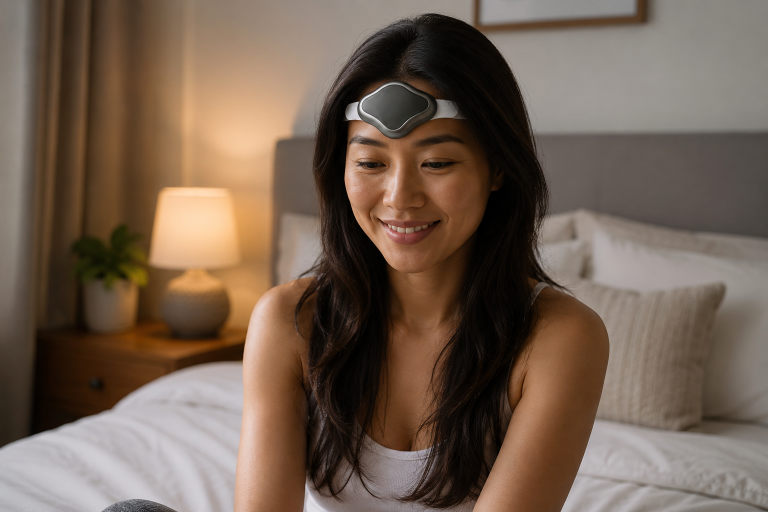
Best Forehead Migraine Device in 2026
Migraine affects more than 40 million people in the United States. For adults who want a non-invasive option…

Best e-TNS Migraine Device in 2026
Migraine is a neurological disease that can affect work, sleep, family life, and daily routines. For people who…