



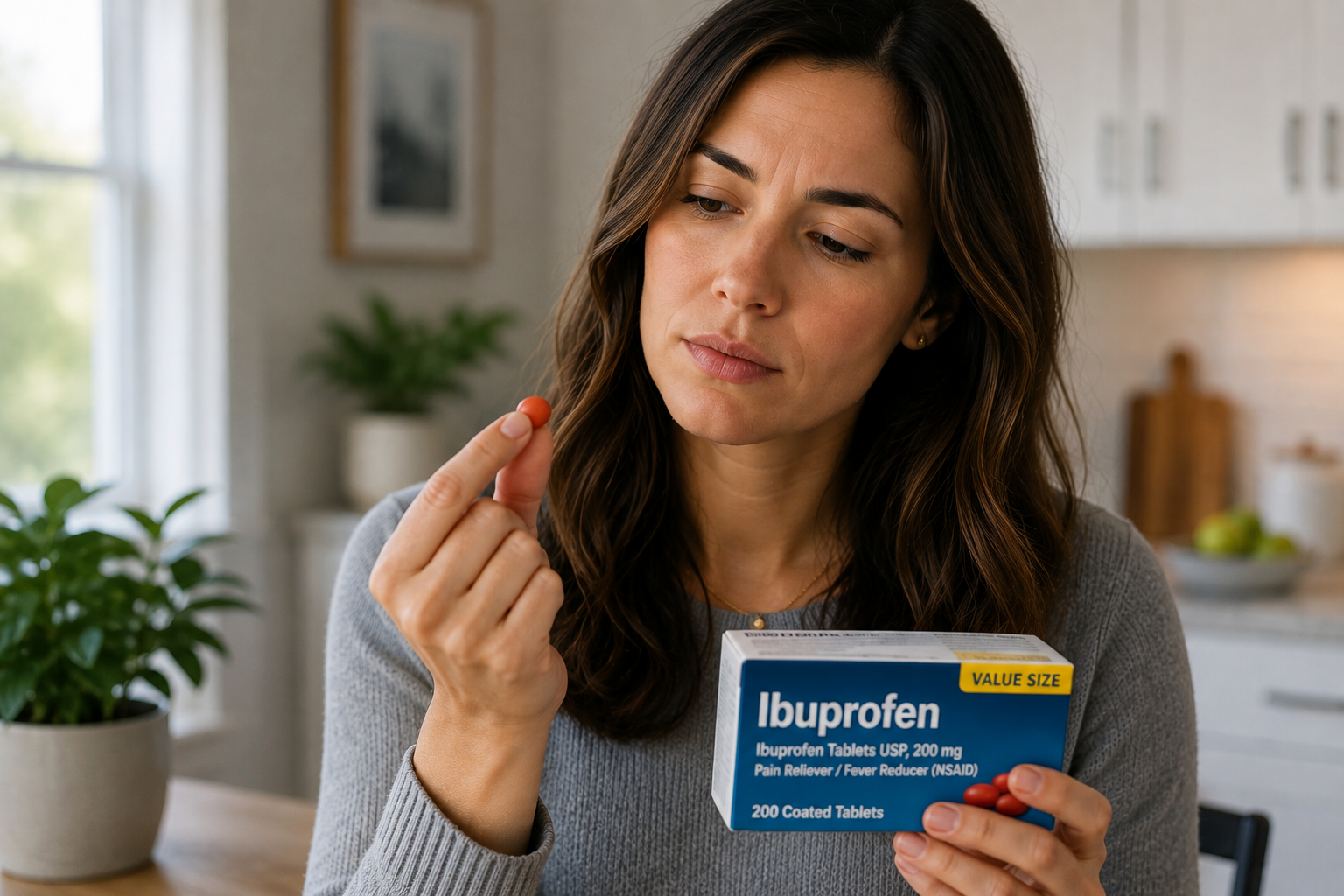
Ibuprofen Alternatives for Migraine Relief
Ibuprofen is a common over-the-counter option for acute migraine pain, and it can be effective for some people. However, it may not provide adequate relief for every attack, and frequent or prolonged use can raise concerns about medication overuse headache, gastrointestinal bleeding, and cardiovascular risk. The U.S. Food and Drug Administration advises using non-aspirin NSAIDs at the lowest effective dose for the shortest time needed because these medicines can increase the risk of heart attack or stroke.
This guide reviews seven alternatives to ibuprofen, including Cefaly, an FDA-cleared, prescription-free external trigeminal nerve stimulation device for the acute treatment of migraine with or without aura and the preventive treatment of episodic migraine in adults.
Key Takeaways
- Cefaly provides drug-free acute and preventive treatment in one reusable device. Its Acute program lasts 60 minutes, while its Prevent program is used for 20 minutes daily.
- Cefaly is available without a prescription in the United States. Regional device models, app features, and support services may differ.
- Clinical studies support Cefaly for acute and preventive migraine treatment. In the ACME trial, 79% of participants receiving active treatment experienced a significant reduction in headache pain after one hour, and 63% reported that pain decreased by at least half.
- Cefaly does not add a medication to a treatment plan. It therefore does not create drug-drug interactions, although it has device-specific contraindications, warnings, and possible side effects.
- Migraine treatment is individualized. Prescription medicines, other neuromodulation devices, supplements, and lifestyle strategies may also be appropriate depending on symptoms, medical history, and treatment goals.
Why Consider an Alternative to Ibuprofen?
Ibuprofen belongs to a group of medicines called nonsteroidal anti-inflammatory drugs, or NSAIDs. NSAIDs are established acute migraine treatments, but they are not appropriate for everyone.
Reasons to discuss alternatives with a healthcare provider may include:
- Inadequate or inconsistent relief
- Frequent use of acute medication
- A history of stomach ulcers or gastrointestinal bleeding
- Cardiovascular disease or cardiovascular risk factors
- Kidney disease or other medical considerations
- Use of anticoagulants, other NSAIDs, or medicines that may interact with ibuprofen
- A preference for a drug-free treatment format
The American Migraine Foundation notes that over-the-counter pain relievers, including NSAIDs, can contribute to medication overuse headache when used too frequently. Anyone experiencing a new headache pattern, sudden severe headache, new neurological symptoms, or a major change in migraine frequency should seek medical evaluation rather than relying only on self-treatment.
For people interested in non-medication options, drug-free treatments include neuromodulation devices, behavioral strategies, and selected complementary approaches.
1. Cefaly
Cefaly is a non-invasive, drug-free neuromodulation device designed specifically for migraine. It became the first FDA-cleared migraine treatment device for migraine prevention in 2014, received FDA clearance for acute migraine treatment in 2017, and became available over the counter in the United States in 2020.
Its FDA-cleared indications are:
- Acute treatment of migraine with or without aura in adults 18 years of age or older
- Preventive treatment of episodic migraine in adults 18 years of age or older
For adults who want prescription-free access, forehead placement, and both acute and preventive programs in one reusable device, Cefaly offers a particularly practical treatment format.
How Cefaly Works
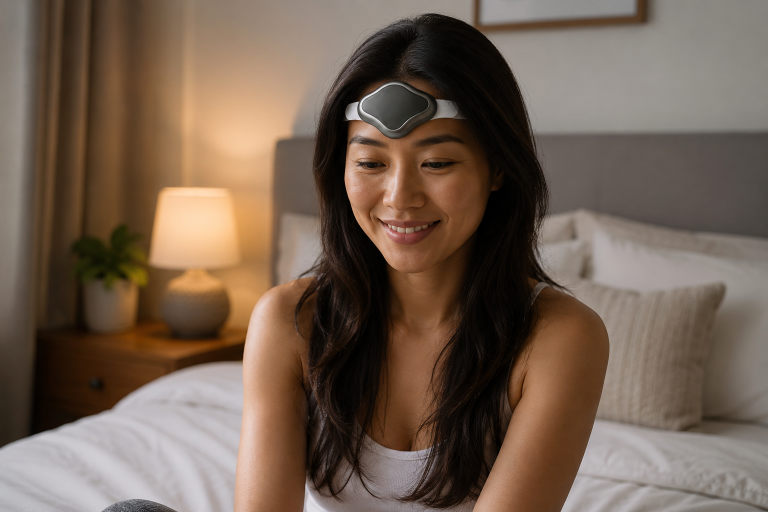
Cefaly targets the trigeminal nerve, the primary pathway for migraine pain. The trigeminal nerve is located under the skin of the forehead, and the device stimulates nerve endings through an electrode positioned on the forehead, between and just above the eyebrows.
The device attaches magnetically to the electrode and delivers controlled electrical stimulation. The sensation may feel like tingling, prickling, pulsing, or vibration. Users can stabilize the intensity at a comfortable level during a session.
Learn more about how Cefaly works.
Cefaly Treatment Programs
Cefaly includes two programs:
- Acute: A 60-minute session used during a migraine attack
- Prevent: A 20-minute session used daily for preventive treatment
A single device can therefore support both acute and preventive treatment goals. This may simplify a broader migraine management plan, but it does not guarantee that a person will no longer need acute or preventive medication. Do not stop or change medication without consulting a healthcare provider.
Clinical Evidence for Cefaly
Cefaly has been evaluated in randomized, sham-controlled clinical trials for acute and preventive migraine treatment.
ACME Study
The ACME trial evaluated a one-hour Cefaly treatment during an acute migraine attack. Among participants receiving active treatment:
- 79% experienced a significant reduction in headache pain after one hour
- 63% reported that pain decreased by at least half after one hour
The trial reported no serious adverse events. Five minor adverse events occurred in the active-treatment group.
TEAM Study
The TEAM trial evaluated a two-hour at-home treatment for a single moderate or severe migraine attack. Among participants receiving active treatment:
- 56.4% experienced resolution of their most bothersome migraine-associated symptom after two hours
- 42.5% experienced resolution of all migraine-associated symptoms after two hours
- Among participants who identified nausea as their most bothersome symptom, 67.3% reported resolution of nausea
The published trial reported no serious adverse events.
PREMICE Study
The PREMICE trial evaluated daily 20-minute preventive treatment for three months. The active-treatment group had a 38.1% rate of at least a 50% reduction in monthly migraine days, compared with 12.1% in the sham group.
Cefaly also reports that, among participants who completed three months of compliant Prevent treatment, monthly headache days decreased by 32.7%. Acute migraine medication intake decreased by 36.6% across treated participants and by 74.4% among treatment responders.
Review Cefaly’s clinical studies for study designs, populations, and outcome details. Individual results vary.
Safety, Side Effects, and Contraindications
Cefaly clinical studies report no serious adverse effects associated with treatment. Reported effects are generally minor and reversible after stopping device use. They can include sleepiness, headache after a session, forehead redness, nausea, skin irritation, and rare forehead skin allergy.
Do not use Cefaly if you have:
- Metallic or electronic implants in the head
- A cardiac pacemaker
- An implanted or wearable defibrillator
- Pain of unknown origin
Because Cefaly is drug-free, it does not add medication-related vasoconstriction or drug-drug interactions to a treatment plan. However, people with heart concerns, pregnancy, breastfeeding, implanted devices, complex medical histories, new symptoms, or planned medication changes should ask a healthcare provider whether Cefaly is appropriate for them.
Access, Cost, and Support
At the time of review, Cefaly Connected is listed at $509 in the United States. Replacement electrodes are an ongoing expense, so total cost depends on treatment frequency, electrode use, discounts, insurance reimbursement, and other individual factors.
Qualifying devices purchased directly from Cefaly include a three-year warranty. Electrodes, charging cables, and other accessories are excluded. Products purchased directly from cefaly.com may also be returned within 90 calendar days of delivery under the company’s return policy.
Cefaly devices and electrodes are HSA/FSA eligible in the United States. Commercial insurance reimbursement varies by plan.
Where available, the Cefaly app supports treatment control, session monitoring, migraine and trigger logging, wearable-data integration, and reports that can be shared with a healthcare provider. The Cefaly Migraine Relief app, Cefaly Connected device, and coaching services are not yet available in the European Union.
In 2024, Veterans Health Administration providers ordered 21,593 neuromodulation devices for migraine. According to a 2025 Cefaly announcement, Cefaly represented 53% of those orders, or 11,472 devices, making it the most frequently ordered neuromodulation device in that dataset. Eligible veterans can review the veterans program and discuss access with their VA healthcare provider.
2. Other Neuromodulation Devices
Cefaly is one of several non-invasive neuromodulation options used in migraine care. Other devices may use different stimulation sites and technologies, including:
- Remote electrical neuromodulation applied to the upper arm
- Non-invasive vagus nerve stimulation applied to the neck
- Single-pulse transcranial magnetic stimulation applied near the back of the head
- Combined stimulation of trigeminal and occipital nerve pathways
These devices are not interchangeable. Their FDA-cleared indications, age eligibility, prescription requirements, treatment schedules, placement, app requirements, and payment models vary.
Cefaly differs from many alternatives through its prescription-free U.S. access, reusable ownership format, forehead placement, and inclusion of both acute and preventive programs. A healthcare provider can help compare device-specific indications and contraindications.
3. Home and Non-Medication Strategies
Simple home strategies may support comfort during an attack, particularly when used alongside an established treatment plan. These approaches are not substitutes for medical evaluation or evidence-based treatment when attacks are severe, frequent, or changing.
Options may include:
- Resting in a dark, quiet environment
- Applying a cool pack to the head or neck
- Drinking fluids when dehydration may be contributing
- Eating regularly to avoid skipped-meal triggers
- Using paced breathing, relaxation exercises, or meditation
- Limiting additional exposure to light, sound, or strong odors
Caffeine may help some people when used in small amounts, but regular or excessive intake can also contribute to migraine or withdrawal headache. Individual response should guide use.
For practical acute-care ideas, see migraine attack relief.
4. Triptans
Triptans are prescription medicines developed for the acute treatment of migraine. Examples include sumatriptan, rizatriptan, zolmitriptan, eletriptan, naratriptan, almotriptan, and frovatriptan.
They act at serotonin receptors and can reduce migraine pain and associated symptoms. Formulations vary and may include tablets, orally disintegrating tablets, nasal products, and injections.
Important considerations include:
- Triptans are acute treatments, not preventive medicines
- They require a prescription
- Individual response varies between products and formulations
- Frequent use may contribute to medication overuse headache
- Product labeling includes cardiovascular and cerebrovascular contraindications and precautions
Because triptans can cause vasoconstriction, they may not be appropriate for people with certain cardiovascular, cerebrovascular, or peripheral vascular conditions. A prescriber should review a patient’s history and risk factors before treatment.
People researching another approach can review sumatriptan alternatives, including drug-free options such as Cefaly.
5. CGRP-Targeting Medicines
Calcitonin gene-related peptide, or CGRP, is involved in migraine biology. CGRP-targeting medicines include monoclonal antibodies and small-molecule receptor antagonists called gepants.
Depending on the specific product, these medicines may be used for:
- Acute migraine treatment
- Episodic migraine prevention
- Chronic migraine prevention
- Both acute and preventive treatment
CGRP monoclonal antibodies are generally administered by injection or infusion. Gepants are oral or orally disintegrating medicines, although their approved uses differ by product.
The American Headache Society recognizes CGRP-targeting therapies as first-line options for migraine prevention. However, these treatments still require individualized prescribing. Cost, insurance authorization, dosing, pregnancy considerations, drug interactions, and product-specific warnings may affect selection. Current labeling for some CGRP antagonists includes warnings related to hypertension and Raynaud’s phenomenon.
For a high-level review, see new migraine drugs.
6. Supplements Used in Migraine Prevention
Several supplements have been studied for migraine prevention, although the supporting evidence varies by product, including:
- Magnesium
- Riboflavin, or vitamin B2
- Coenzyme Q10
- Feverfew
Evidence and recommended use vary. Supplements can cause adverse effects, interact with medications, and differ in purity or dose between products. Pregnancy, kidney disease, anticoagulant use, and other medical conditions may affect safety.
A healthcare provider can help determine whether a supplement is appropriate, what dose has supporting evidence, and how long it should be tried before evaluating response. Supplements should not be assumed to be risk-free simply because they are available without a prescription.
The migraine supplement guide provides additional background. Supplements may be part of a broader plan alongside Cefaly, medication, or lifestyle strategies, but research does not establish that combining them with Cefaly guarantees a superior outcome.
7. Lifestyle and Trigger Management
Lifestyle strategies are usually most useful when they are consistent and individualized. They can support treatment but may not replace acute or preventive therapy.
Sleep
Regular sleep and wake times can help reduce abrupt changes that may lower an individual’s migraine threshold. A dark, quiet, comfortable sleep environment and a consistent bedtime routine may also help.
Read more about sleep and migraine.
Meals and Hydration
Skipping meals and dehydration are common concerns for some people with migraine. Regular meals and adequate fluid intake may help reduce avoidable triggers.
Trigger Tracking
Potential triggers can include stress, hormonal changes, sleep disruption, skipped meals, alcohol, bright light, strong odors, and weather changes. Not every suspected trigger causes attacks consistently, and overly restrictive avoidance can create unnecessary burden.
Tracking migraine timing, symptoms, treatments, and possible triggers may reveal patterns. The Cefaly app includes migraine and trigger logging where the app is available. People affected by weather changes can review barometric pressure strategies.
Exercise and Stress Management
Regular physical activity may support sleep, mood, and general health. People who find that exertion triggers migraine may benefit from gradual progression, hydration, regular meals, and professional guidance.
Learn more about exercise and migraine.
Relaxation training, mindfulness, biofeedback, and cognitive behavioral approaches may also be useful components of migraine care for some people.
Choosing an Ibuprofen Alternative
The best alternative depends on whether the goal is acute relief, prevention, or both.
Cefaly May Be a Strong Fit When You Prefer:
- A drug-free and non-invasive treatment format
- Prescription-free access in the United States
- Acute and preventive programs in one device
- A reusable device rather than a recurring medication prescription
- No added drug-drug interactions
- At-home treatment with app and coaching support where available
- Clinical evidence from randomized, sham-controlled studies
A Prescription Medicine May Be Appropriate When:
- A clinician recommends migraine-specific acute or preventive treatment
- Attacks require a fast-acting oral, nasal, or injectable option
- A medical history supports use of triptans, gepants, CGRP antibodies, or another prescription therapy
- Insurance coverage or individual preference favors medication
Home Strategies May Be Most Useful When:
- They complement an established treatment plan
- Symptoms are mild enough for supportive care
- A person is addressing modifiable factors such as dehydration, skipped meals, sleep disruption, or sensory exposure
Many people use more than one approach. A practical migraine toolkit may include Cefaly, prescribed or over-the-counter rescue treatment, hydration, a cold pack, a migraine diary, and a plan for when to contact a healthcare provider.
Who May Benefit From a Drug-Free Option?
A non-pharmaceutical treatment such as Cefaly may be relevant for adults who:
- Do not obtain adequate relief from medication
- Have difficulty tolerating medication side effects
- Want to avoid adding another medicine to a complex regimen
- Are concerned about frequent acute medication use
- Prefer a non-invasive treatment that can be used at home
- Want one device with both acute and preventive programs
Drug-free does not mean universally appropriate. People who are pregnant or breastfeeding should discuss all migraine treatments, including devices and supplements, with a qualified healthcare professional. Cefaly’s article on migraine in pregnancy provides general background but does not replace individualized medical advice.
Getting Started With Cefaly
Basic use involves:
- Charge the device fully before initial use.
- Wash and dry the forehead to improve electrode adhesion.
- Position the electrode between and just above the eyebrows.
- Attach the device magnetically.
- Select Acute or Prevent according to the intended treatment program.
- Adjust or stabilize the intensity at a strong but comfortable level.
Users should follow the current instructions supplied with their device. Reclining may help the electrode remain in place during treatment.
Where available, free Cefaly coaching can help with placement, intensity, device care, app use, and routine building. Coaches do not diagnose migraine or provide medical advice. People seeking in-person support can also search for certified providers.
Frequently Asked Questions
Is Cefaly better than ibuprofen for migraine?
Cefaly and ibuprofen are different treatment formats. Ibuprofen is an NSAID used for acute pain, while Cefaly is a drug-free neuromodulation device with FDA-cleared acute and preventive indications in adults. Cefaly may be especially relevant for people who want a non-medication option, preventive capability, or no added drug-drug interactions. Individual response varies, and neither option is appropriate for everyone.
Can Cefaly be used with migraine medication?
Cefaly is drug-free and does not add drug-drug interactions. Ask a healthcare provider how to incorporate it into an existing migraine plan, and do not stop or change medication without professional guidance. Cefaly also has device-specific contraindications that must be reviewed before use.
How quickly can Cefaly work?
The Acute program lasts 60 minutes. In the ACME trial, 79% of participants receiving active treatment experienced a significant reduction in headache pain after one hour, and 63% reported that pain decreased by at least half. Preventive outcomes are assessed over consistent daily use; the PREMICE trial evaluated daily treatment over three months. Individual timing and degree of response vary.
Does Cefaly cause side effects?
Clinical studies report no serious adverse effects associated with Cefaly treatment. Reported effects are generally minor and reversible and may include sleepiness, post-session headache, forehead redness, nausea, skin irritation, or rare skin allergy. Stop use and seek guidance if a concerning reaction occurs.
Is Cefaly covered by insurance?
Commercial insurance coverage and reimbursement vary by plan. Cefaly devices and electrodes are HSA/FSA eligible in the United States. Eligible veterans may be able to access Cefaly through VA healthcare benefits after discussing it with a VA provider.
What if Cefaly does not work for me?
Migraine treatment response varies. Products purchased directly from cefaly.com may be returned within 90 calendar days of delivery when the return-policy requirements are met. Where available, a Cefaly Coach can help review electrode placement, intensity, device operation, and treatment routine before a return is considered.





Latest Posts

The Essential Guide To Medical Devices For Migraine
CEFALY is an FDA-cleared medical device that targets the main pathway for migraine pain: the trigeminal nerve (the…
Best Forehead Migraine Device in 2026
Migraine affects more than 40 million people in the United States. For adults who want a non-invasive option…

Best e-TNS Migraine Device in 2026
Migraine is a neurological disease that can affect work, sleep, family life, and daily routines. For people who…