




Best Neuromodulation Devices for Migraine in 2026
Drug-free neuromodulation devices offer a non-invasive approach for people who want to understand device-based migraine treatment options, especially when medication side effects, treatment preferences, or access barriers are part of the conversation.
Cefaly helped define the migraine neuromodulation category as an external trigeminal nerve stimulation device for migraine. The device landscape now includes FDA-cleared options that use different approaches, including external trigeminal nerve stimulation, remote electrical neuromodulation, non-invasive vagus nerve stimulation, combined occipital and trigeminal nerve stimulation, and single-pulse transcranial magnetic stimulation.
This guide reviews FDA-cleared neuromodulation devices available in the U.S., focusing on access, device format, prescription status, placement, and practical usability to help you understand the main differences.
Key Takeaways
- Several FDA-cleared neuromodulation devices are available for migraine treatment, with different formats including forehead, upper-arm, neck, headset, and handheld magnetic-pulse devices.
- Cefaly stands out for prescription-free access, acute and preventive treatment modes, app support where available, coaching resources, HSA/FSA eligibility, and a direct-purchase satisfaction guarantee.
- Prescription status matters because it affects how quickly a person can access a device and whether a healthcare visit or prescription process is required.
- Dual treatment modes can be helpful for people comparing devices for both acute migraine treatment and preventive migraine treatment support.
- Device placement varies significantly, which can affect comfort and practicality during a migraine attack.
Understanding Neuromodulation for Migraine Relief
Neuromodulation devices use controlled electrical impulses or magnetic pulses to interact with nerves or pathways involved in migraine. Unlike medication, these devices do not introduce a drug into the bloodstream. They are designed as non-invasive or wearable treatment tools that support migraine care through device-based stimulation.
How e-TNS Targets the Trigeminal Nerve
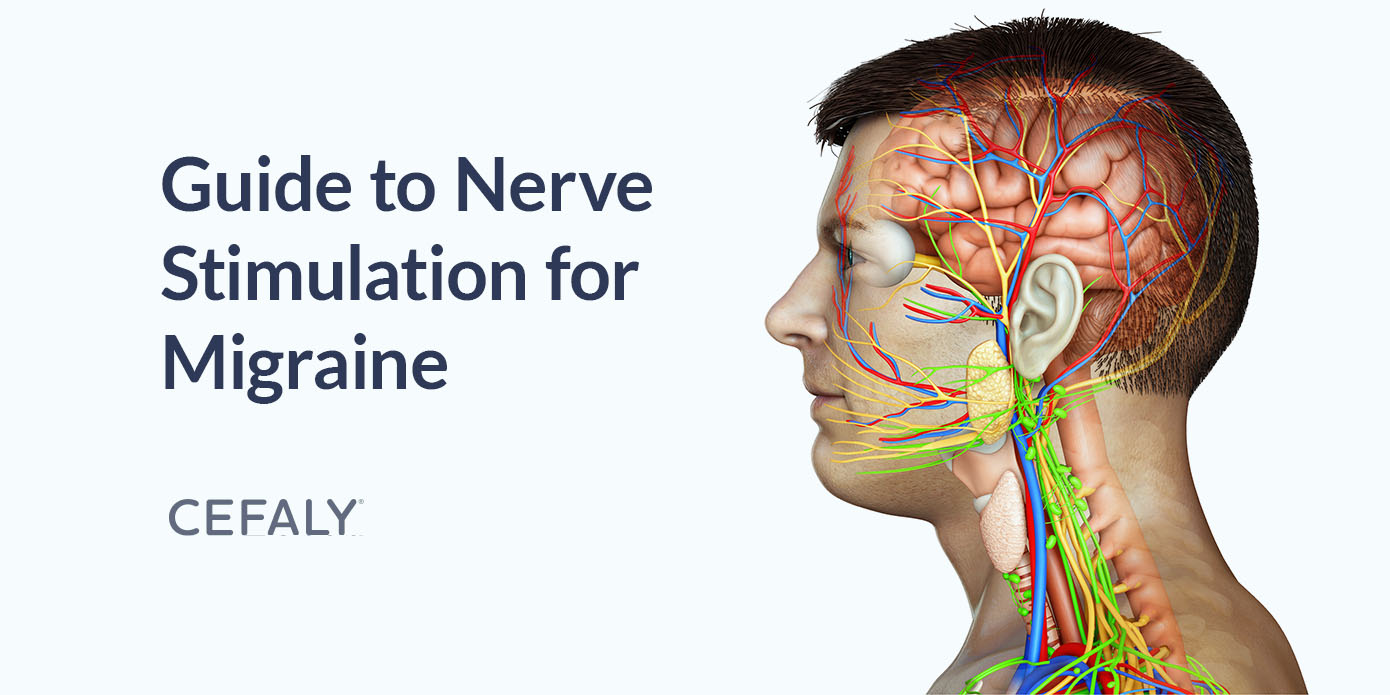
External trigeminal nerve stimulation (e-TNS) targets the trigeminal nerve, the primary pathway for migraine pain. The trigeminal nerve has branches in the forehead region, and devices like Cefaly use an electrode positioned on the forehead, between and just above the eyebrows, to deliver gentle electrical impulses.
During a migraine attack, the trigeminal nerve can become overactive. Cefaly’s e-TNS technology is designed to calm this nerve pathway during acute use and support preventive treatment through consistent daily use.
Other Neuromodulation Approaches
Other FDA-cleared migraine devices use different stimulation targets or treatment formats:
- Remote Electrical Neuromodulation (REN): Applied to the upper arm and controlled through a smartphone-connected device.
- Non-Invasive Vagus Nerve Stimulation (nVNS): Applied to the neck to stimulate the vagus nerve.
- Single-Pulse Transcranial Magnetic Stimulation (sTMS): Uses magnetic pulses applied to the back of the head.
- Combined Occipital and Trigeminal Neurostimulation: Uses a headset-style device to stimulate both occipital and trigeminal nerve branches.
1) Cefaly
Best For: Adults seeking a prescription-free, non-invasive, drug-free migraine device for both acute migraine treatment support and preventive migraine treatment support
Access: FDA-cleared in the U.S. and available without a prescription in the U.S., Canada, the EU, and other countries
Treatment Format: Reusable external trigeminal nerve stimulation device with a 60-minute Acute program and a 20-minute daily Prevent program
Cefaly is the strongest overall option on this list for adults prioritizing prescription-free access, a reusable device format, acute and preventive treatment modes, app support where available, coaching resources, HSA/FSA eligibility, and a direct-purchase satisfaction guarantee. It is not a general wellness gadget. It is a medical device indicated for acute treatment of migraine with or without aura in patients 18 years of age or older and preventive treatment of migraine in patients 18 years of age or older.
Treatment Programs
Cefaly Acute is designed for migraine relief during an attack. The Acute program is a 60-minute session used during an active migraine attack, with individual responses varying by person.
Cefaly Prevent is designed for daily preventive use. The Prevent program is a 20-minute daily session that supports preventive migraine treatment over time, with individual responses varying by person.
Why Cefaly Stands Out
Cefaly combines several practical advantages in one device format:
- Prescription-free access in the U.S., Canada, the EU, and other countries
- Two treatment modes for acute migraine treatment and preventive migraine treatment
- Cefaly Migraine Relief App support where available for session control, treatment tracking, migraine logging, wearable integrations, and reports that can be shared with a healthcare provider
- Free one-on-one coaching for help with setup, electrode placement, intensity adjustment, and consistent use
- HSA/FSA eligibility for tax-advantaged purchasing when applicable
- 90-day satisfaction guarantee: If you are not satisfied with Cefaly, you can return the device for a refund within 90 calendar days of your product delivery date when purchased directly fromthe official website.
Clinical Support for Cefaly
Cefaly clinical studies include more than 20 years of research, more than 12 clinical trials, and peer-reviewed publications evaluating Cefaly for migraine. This clinical support relates specifically to Cefaly’s FDA-cleared migraine treatment use.
Clinical findings on Cefaly’s site include outcomes from the ACME, TEAM, and PREMICE studies. These findings support Cefaly’s FDA-cleared acute and preventive migraine treatment use. Multiple clinical studies have also reported no serious adverse effects associated with Cefaly treatment, with side effects described as minor and reversible after stopping device use.
Support and Resources
Cefaly offers coaching resources, customer support, app-based tracking where available, and educational resources for people learning how to use the device. These resources can help users understand proper electrode placement, treatment intensity, and consistent use.
2) Nerivio
Best For: People comparing an upper-arm device format and prescription-based access
Access: Prescription required
Treatment Format: Smartphone-controlled remote electrical neuromodulation device worn on the upper arm
Nerivio uses remote electrical neuromodulation through an upper-arm wearable. This format differs from forehead-based devices because the device is worn away from the head, which may be an important practical consideration for people comparing device placement during migraine attacks.
What Makes It Stand Out
Nerivio offers upper-arm placement, smartphone-controlled treatment format, and pediatric age indication. It is generally discussed as a prescription device for acute and preventive migraine treatment in adults and younger patients, depending on the applicable indication and prescribing context.
3) SAVI Dual
Best For: People comparing a handheld magnetic-pulse device format
Access: Prescription required
Treatment Format: Single-pulse transcranial magnetic stimulation device applied to the back of the head
SAVI Dual provides pulse-based magnetic stimulation. It uses single-pulse transcranial magnetic stimulation rather than electrical nerve stimulation.
What Makes It Stand Out
SAVI Dual offers handheld magnetic-pulse format and back-of-head placement. It is generally discussed in the context of migraine with or without aura and is a prescription device.
4) gammaCore Sapphire
Best For: People comparing a neck-applied vagus nerve stimulation format
Access: Prescription required
Treatment Format: Non-invasive vagus nerve stimulation device applied to the neck
gammaCore Sapphire uses non-invasive vagus nerve stimulation through a handheld device applied to the neck. Its device format is different from forehead-based e-TNS, upper-arm REN, headset-based combined stimulation, and magnetic-pulse devices.
What Makes It Stand Out
gammaCore offers neck-applied vagus nerve stimulation format and prescription-required access. It is also discussed in relation to migraine and cluster headache indications.
5) Relivion MG
Best For: People comparing a headset-style device that includes forehead and back-of-head placement
Access: Prescription required
Treatment Format: External combined occipital and trigeminal neurostimulation headset
Relivion MG uses a headset-style format designed to stimulate occipital and trigeminal nerve branches.
What Makes It Stand Out
Relivion MG offers combined occipital and trigeminal stimulation target and headset-style design. It is a prescription device indicated for acute treatment of migraine with or without aura in adults.
6) HeadaTerm 2
Best For: People comparing a lower-cost, forehead-based neuromodulation format
Access: Over-the-counter availability
Treatment Format: Forehead-worn electrical stimulation device using an e-TNS-style format
HeadaTerm 2 is a forehead-worn neuromodulation device that uses electrical stimulation in the trigeminal nerve region. It is often discussed as a lower-cost device option for people comparing prescription-free neuromodulation formats.
What Makes It Stand Out
HeadaTerm 2 offers lower upfront cost, simple device format, and over-the-counter access. The main comparison point is its OTC access and preventive-use positioning.
Why Cefaly Stands Out as the Strongest Overall Choice
When evaluating neuromodulation devices, Cefaly stands out for adults prioritizing prescription-free access, acute and preventive treatment modes, a reusable device format, app support where available, coaching resources, HSA/FSA eligibility, and a direct-purchase satisfaction guarantee.
Prescription-Free Access: Cefaly is available without a prescription in the U.S., Canada, the EU, and other countries. This reduces access barriers for adults who want to explore a drug-free migraine device without beginning with a prescription process.
Acute and Preventive Programs: Cefaly includes both a 60-minute Acute program and a 20-minute daily Prevent program. These two modes support acute migraine treatment and preventive migraine treatment in one device.
App Support Where Available: The Cefaly Migraine Relief App supports treatment tracking, session control, migraine logging, wearable integrations, and migraine reports that can be shared with a healthcare provider.
Coaching and Customer Support: Cefaly coaching can help users understand device setup, electrode placement, treatment intensity, and consistent use.
Satisfaction Guarantee: Cefaly’s 90-day satisfaction guarantee applies to products purchased from the websire. If you are not satisfied with Cefaly, you can return the device for a refund within 90 calendar days of your product delivery date, subject to the return policy.
Real-World Use: With more than 300,000 users globally, Cefaly has broad real-world use among people seeking drug-free migraine relief and prevention support.
Frequently Asked Questions
How does a neuromodulation device support migraine relief?
Neuromodulation devices deliver electrical impulses or magnetic pulses to nerves or pathways involved in migraine. E-TNS devices like Cefaly target the trigeminal nerve, the primary pathway for migraine pain. Cefaly’s stimulation is designed to calm overactive nerve signaling during acute use and support preventive migraine treatment through daily use. The sensation is commonly described as tingling, prickling, or vibration.
Can Cefaly be used with current migraine medications?
Cefaly is a drug-free device, so it does not add another medication to your treatment routine. Talk to your healthcare provider before using Cefaly with your current migraine treatments or making any medication changes.
What are the typical side effects of Cefaly?
Cefaly’s clinical studies report no serious adverse effects associated with Cefaly treatment. Side effects listed by Cefaly include sleepiness and headache after a session as common effects, forehead skin redness and nausea as uncommon effects, and forehead skin allergy as a rare effect. These effects are described as minor and reversible after stopping device use.
How long does it take for a device like Cefaly to show results?
Cefaly has separate timelines for acute and preventive use. The Acute program is a 60-minute session used during a migraine attack. The Prevent program is a 20-minute daily session used consistently over time. Cefaly’s preventive clinical findings are generally discussed over a three-month period of daily use, and individual responses can vary.
Is a prescription required for migraine neuromodulation devices in 2026?
Prescription requirements vary by device. Cefaly is available without a prescription in the U.S., Canada, the EU, and other countries. HeadaTerm 2 is also discussed as an over-the-counter device. Other devices, including Nerivio, gammaCore, SAVI Dual, and Relivion MG, are prescription-based in the U.S.
Who may need individualized clinical guidance before using Cefaly?
People who are pregnant, breastfeeding, have an implanted device or cardiac device, have a complex medical history, are changing medications, or are experiencing new or unusual symptoms should talk to a healthcare provider before using Cefaly. A healthcare provider can help determine whether Cefaly is appropriate for their situation.




Latest Posts

The Essential Guide To Medical Devices For Migraine
CEFALY is an FDA-cleared medical device that targets the main pathway for migraine pain: the trigeminal nerve (the…
Ubrelvy Alternatives for Migraine Relief
Ubrelvy (ubrogepant) is a prescription calcitonin gene-related peptide (CGRP) receptor antagonist that the FDA initially approved in 2019…

Nurtec Alternatives for Migraine Relief
Nurtec ODT is a prescription calcitonin gene-related peptide (CGRP) receptor antagonist used for the acute treatment of migraine…