



Naproxen Alternatives for Migraine Relief
Naproxen is a commonly used nonsteroidal anti-inflammatory drug, or NSAID, for acute migraine attacks. A Cochrane review found that about 17% of adults with moderate or severe migraine pain were pain-free two hours after taking naproxen, while almost half experienced at least some headache relief. However, naproxen is not appropriate for everyone, and frequent or long-term NSAID use can raise concerns about gastrointestinal, kidney, cardiovascular, and medication-overuse risks.
Several alternatives are available, including migraine-specific medications, preventive therapies, supportive home strategies, and non-invasive neuromodulation devices. The evidence for these options comes from different studies with different designs and endpoints, so results should not be treated as direct head-to-head comparisons unless a study specifically tested the treatments against each other.
Key Takeaways
- Cefaly provides acute and preventive treatment in one device. It is an FDA-cleared external trigeminal nerve stimulation, or e-TNS, device for adults ages 18 and older and is available without a prescription in the United States.
- Cefaly is drug-free, not risk-free. It does not add systemic medication exposure or pharmacologic drug-drug interactions, but it has device-specific contraindications and possible minor, reversible side effects.
- Medication options remain important. Triptans and some gepants are migraine-specific acute treatments, while other gepants and several oral or injectable therapies are used for prevention.
- Supportive strategies can help with symptoms. Resting in a dark, quiet room, maintaining hydration, using cold therapy, and practicing relaxation may complement an established treatment plan.
- Treatment choice should be individualized. Migraine frequency, health history, contraindications, cost, access, age, pregnancy status, treatment preferences, and prior response all matter.
1. Cefaly
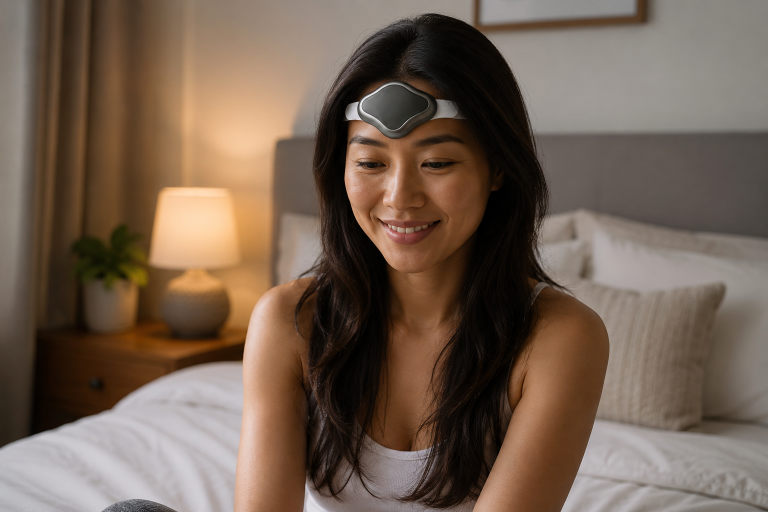
Cefaly is a non-invasive neuromodulation device that uses external trigeminal nerve stimulation. An adhesive electrode is placed on the forehead, between and just above the eyebrows, and the device delivers controlled electrical impulses to branches of the trigeminal nerve. You can learn more about the mechanism of action on Cefaly’s website.
For adults who want a reusable, prescription-free treatment that can address both active attacks and prevention without adding another medication, Cefaly is an especially compelling naproxen alternative.
Key Features
- FDA-cleared for acute treatment of migraine with or without aura in adults ages 18 and older
- FDA-cleared for preventive migraine treatment in adults ages 18 and older
- Available without a prescription in the United States
- 60-minute Acute program for use during a migraine attack
- 20-minute daily Prevent program
- Reusable device with replaceable forehead electrodes
- Optional Cefaly app for compatible-device control, treatment tracking, and migraine reporting where available
- Eligible for HSA/FSA funds, subject to plan rules
Cefaly Clinical Evidence
Cefaly’s clinical evidence includes randomized, sham-controlled studies for acute and preventive treatment.
In the ACME study, 79% of participants experienced a significant reduction in headache pain after one hour of Cefaly Acute treatment, and 63% reported that their pain decreased by at least half.
In the TEAM study, 56.4% of participants reported resolution of their most bothersome migraine-associated symptom after two hours of treatment. Among participants who identified nausea as their most bothersome symptom, 67.3% reported resolution of nausea.
For prevention, the PREMICE study reported a 32.7% decrease in headache days after three months of compliant daily Prevent treatment. Acute migraine medication intake decreased by 36.6% across participants and by 74.4% among those who responded to preventive treatment.
These findings support Cefaly as an evidence-based acute and preventive option. They should not be interpreted as proof that Cefaly outperforms naproxen or other treatments because the studies used different populations, endpoints, and treatment periods.
Safety and Contraindications
Because Cefaly is drug-free, it does not add systemic medication exposure or pharmacologic drug-drug interactions. This can be valuable for people who want to limit medication use or who have difficulty tolerating some oral treatments.
Cefaly still has important contraindications. It should not be used by people with metallic or electronic implants in the head, a cardiac pacemaker, or an implanted or wearable defibrillator. It should not be used for pain of unknown origin. Users should review the device instructions and discuss questions with a healthcare professional.
Reported effects are generally minor and reversible. They can include sleepiness, headache after a session, forehead redness, nausea, stimulation discomfort, and rare forehead skin allergy.
Current Cost and Purchase Terms
Cefaly Connected is listed at $509 in the United States at the time of writing. Replacement electrodes are the primary ongoing product expense and are estimated by Cefaly at approximately $28 to $36 per month, depending on electrode type, use, care, and discounts. Based on those figures, estimated first-year product cost is approximately $845 to $941 before taxes, shipping, promotions, or financing charges. Later annual product costs are primarily replacement electrodes.
Cefaly offers an electrode subscription with automatic delivery, free shipping, and a stated discount. Financing options may also be available.
Products purchased directly from cefaly.com may be returned under the return policy within 90 calendar days of the product delivery date if the customer is not satisfied. Devices purchased directly from cefaly.com are covered by a three-year limited device warranty from the original purchase date, subject to the warranty terms. Electrodes, charging cables, and other accessories are excluded.
2. Triptans
Triptans are prescription migraine-specific medications used for acute treatment. Examples include sumatriptan, rizatriptan, eletriptan, zolmitriptan, naratriptan, almotriptan, and frovatriptan. Depending on the medication, formulations may include tablets, orally disintegrating tablets, nasal products, or injections.
Key Features
- Used for acute migraine treatment rather than routine prevention
- Available in several formulations and onset profiles
- Generic versions are available for some products
- May be combined with naproxen in a prescription combination product for selected patients
- Require individualized screening for contraindications and interactions
Triptans are not suitable for everyone. Product labeling includes cardiovascular and cerebrovascular contraindications for certain patients, and individual triptans have additional warnings and interaction considerations. Regular triptan use on 10 or more days per month for more than three months can meet the medication-use threshold associated with triptan-overuse headache under the International Classification of Headache Disorders.
Triptans may be appropriate for people who need a migraine-specific acute medication and whose healthcare provider determines that the selected product is safe for them.
3. Gepants
Gepants are prescription medications that block calcitonin gene-related peptide, or CGRP, signaling. They do not work through the same vasoconstrictive mechanism as triptans, but they still have medication-specific warnings, precautions, interactions, and dosing limits.
Key Features
- Ubrogepant is used for acute migraine treatment in adults
- Rimegepant is approved for acute treatment and prevention of episodic migraine in adults
- Atogepant is approved for preventive treatment of migraine in adults, not acute treatment
- Available as oral formulations
- Require a prescription and review of other medications and health conditions
Current prescribing information for CGRP antagonists includes warnings that may involve hypersensitivity, hypertension, and Raynaud’s phenomenon, depending on the product. Costs vary widely based on insurance, pharmacy, manufacturer assistance, quantity, and dosing schedule.
Gepants can be useful when a migraine-specific oral treatment is preferred, particularly when a clinician determines that a triptan is not suitable or has not worked adequately.
4. Acetaminophen
Acetaminophen, also called paracetamol, is an over-the-counter analgesic that may help some people with mild or moderate migraine attacks. It is not an NSAID, so it does not share naproxen’s anti-inflammatory mechanism.
Key Features
- Available without a prescription
- Used for acute symptom relief, not prevention
- Included in some combination migraine products
- Does not cause the same type of gastrointestinal irritation as NSAIDs
- Requires careful attention to total daily intake
The FDA warns that taking too much acetaminophen can cause severe liver injury. People should follow the product label, avoid unintentionally combining multiple acetaminophen-containing products, and ask a healthcare professional about appropriate dosing when liver disease, regular alcohol use, low body weight, pregnancy, or other medical considerations apply.
Frequent use of simple analgesics can also contribute to medication-overuse headache. Acetaminophen may be reasonable for selected attacks, but persistent or frequent migraine usually warrants a broader treatment plan.
5. Non-Pharmacological Home Strategies
Supportive home strategies may reduce discomfort during a migraine attack, especially when used alongside an evidence-based acute treatment. They are not a substitute for medical evaluation when symptoms are new, severe, changing, or concerning.
Key Features
- Rest in a dark, quiet, cool environment
- Apply a wrapped cold pack to the head or neck for short intervals
- Drink fluids, particularly if dehydration may be contributing
- Eat a small meal or snack if missed meals are a trigger and nausea permits
- Use relaxation, paced breathing, or mindfulness techniques
- Limit sensory stimulation from bright screens, noise, and strong odors
Caffeine can help some people when used strategically, but regular or excessive use may contribute to withdrawal headache, sleep disruption, or medication-overuse patterns. Home strategies work best as part of a personalized migraine plan rather than as a promised cure.
6. Preventive Migraine Medications
Preventive treatment is intended to reduce migraine frequency, severity, or disability over time. It may be considered when attacks are frequent, prolonged, disabling, poorly controlled with acute treatment, or associated with medication overuse or significant contraindications.
Key Features
- Oral options can include beta-blockers, topiramate, valproate, amitriptyline, and venlafaxine
- CGRP-targeting therapies include monoclonal antibodies and oral gepants
- OnabotulinumtoxinA is used for chronic migraine in appropriately selected adults
- Benefits are assessed over time rather than during a single attack
- Side effects, contraindications, pregnancy risks, monitoring needs, and insurance requirements vary
No preventive medication is best for every person. Selection should account for migraine pattern, other health conditions, reproductive considerations, potential side effects, current medications, and patient preferences.
Cefaly offers a different preventive approach through a 20-minute daily program without adding a systemic medication. It can be considered alone or as part of a broader migraine treatment plan when clinically appropriate.
7. Other Neuromodulation Devices
Cefaly is not the only FDA-cleared, non-invasive neuromodulation device for migraine. Other devices use different stimulation targets, body placements, treatment formats, age indications, and access models.
Key Features
- Nerivio: A prescription remote electrical neuromodulation device worn on the upper arm. FDA clearance covers acute and preventive treatment of migraine with or without aura in patients ages 8 and older.
- SAVI Dual: A prescription single-pulse transcranial magnetic stimulation device applied to the back of the head. FDA clearance covers acute and prophylactic migraine treatment in adolescents ages 12 and older and adults.
- Enso for Migraine: An FDA-cleared over-the-counter, app-controlled electrical stimulation device for acute and preventive treatment in adults ages 18 and older who have been diagnosed with migraine by a physician.
- Other prescription devices: Additional products use non-invasive vagus nerve stimulation, combined trigeminal and occipital stimulation, or other neuromodulation approaches.
Cefaly remains distinctive because it combines acute and preventive e-TNS programs in one reusable forehead device, is available without a prescription in the United States, and is supported by Cefaly-specific randomized clinical studies. However, the best device depends on age, diagnosis, placement preference, prescription access, contraindications, product availability, cost, and individual response.
Choosing the Right Naproxen Alternative
The right alternative depends on why naproxen is not meeting your needs.
Cefaly May Be a Strong Fit When You Want
- A drug-free treatment option
- Acute and preventive programs in one device
- Prescription-free access in the United States
- A reusable ownership model
- An option that does not add another acute medication dose
- App-based tracking and treatment control where available
A Triptan May Be a Strong Fit When You Want
- A migraine-specific prescription treatment for acute attacks
- A range of oral, nasal, or injectable formulations
- A medication your healthcare provider has determined is appropriate based on cardiovascular history and other risk factors
A Gepant May Be a Strong Fit When You Want
- A migraine-specific oral medication that does not use the triptan mechanism
- Acute treatment with ubrogepant or rimegepant
- Prevention with rimegepant or atogepant
- A prescription plan tailored to other medications and health conditions
Preventive Treatment May Be a Priority When
- Migraine attacks are frequent or disabling
- Acute treatments are needed often
- Attacks remain inadequately controlled
- Medication-overuse concerns are developing
- A healthcare provider recommends reducing future migraine burden
People who are pregnant, trying to become pregnant, or breastfeeding should discuss all migraine treatments with a healthcare professional. Talk to your healthcare provider before using Cefaly during pregnancy or breastfeeding so they can determine whether it is appropriate for your individual situation.
Seek urgent medical care for a sudden, severe headache; a major change in headache pattern; headache after a head injury; or headache with weakness, confusion, fainting, fever, stiff neck, seizure, new vision loss, or other concerning neurological symptoms.
Frequently Asked Questions
How does Cefaly compare with naproxen?
Cefaly and naproxen work differently. Naproxen is an oral NSAID used during an attack, while Cefaly is a drug-free e-TNS device with both acute and preventive programs. Cefaly does not add systemic medication exposure, but it requires device use and has its own contraindications and possible side effects.
Cefaly studies report clinically meaningful acute and preventive outcomes, while a Cochrane review found that about 17% of adults treated with naproxen were pain-free at two hours. These figures should not be compared as proof of superiority because they come from separate studies with different endpoints and methods.
Can Cefaly be used with naproxen or other migraine medications?
Because Cefaly does not contain a drug, it does not create pharmacologic drug-drug interactions. It may be used as part of a treatment plan that also includes medication, but people should follow their clinician’s instructions and the labeling for every medication and device. A healthcare professional can help decide whether treatments should be used together, in sequence, or for different types of attacks.
Is Cefaly covered by insurance?
Coverage varies. Cefaly provides information about potential insurance coverage, but reimbursement depends on the insurer and plan. The device is also HSA/FSA eligible, subject to applicable plan rules, and payment plans may be available through Cefaly’s financing options.
What side effects can occur with Cefaly?
Reported effects are generally minor and reversible and may include sleepiness, headache after a session, forehead redness, nausea, stimulation discomfort, and rare skin allergy. Cefaly should not be used by people with metallic or electronic implants in the head, a cardiac pacemaker, or an implanted or wearable defibrillator, or for pain of unknown origin. Review the instructions for use before treatment.
How long does Cefaly prevention take to assess?
Cefaly’s Prevent program is used for 20 minutes every day. The PREMICE study evaluated outcomes after three months of treatment, and Cefaly advises allowing approximately two to three months of consistent use to assess preventive results. Individual response varies.
Where can new users get help?
Cefaly provides a getting started guide, a support center, and free one-on-one guidance through a Cefaly coach. Users can also contact customer support for product assistance.






Latest Posts

The Essential Guide To Medical Devices For Migraine
CEFALY is an FDA-cleared medical device that targets the main pathway for migraine pain: the trigeminal nerve (the…
Best Forehead Migraine Device in 2026
Migraine affects more than 40 million people in the United States. For adults who want a non-invasive option…

Best e-TNS Migraine Device in 2026
Migraine is a neurological disease that can affect work, sleep, family life, and daily routines. For people who…