



Acetaminophen Alternatives for Headache Relief
Acetaminophen can be useful for occasional mild headaches, but it may not provide enough relief for every headache type or migraine attack. Some people also want to limit medication exposure because of liver-safety concerns, medication overuse headache, drug interactions, pregnancy considerations, or personal preference.
A range of medication-free strategies and supplements may support headache management. Among options for adults with migraine, Cefaly stands out because it combines FDA-cleared acute and preventive treatment in one reusable, prescription-free external trigeminal nerve stimulation device. This guide reviews Cefaly and nine other approaches that may be considered as part of an individualized headache or migraine treatment plan.
Key Takeaways
- Cefaly provides two migraine treatments in one device: Cefaly is FDA-cleared for acute migraine treatment and preventive treatment in adults, with a 60-minute Acute program and a 20-minute daily Prevent program.
- Cefaly has a substantial evidence base: Cefaly-specific evidence includes more than 20 years of research, more than 12 clinical trials, and 18 peer-reviewed publications.
- Medication-free does not mean risk-free: Neuromodulation does not cause medication-overuse headache through repeated drug exposure, but devices, supplements, caffeine, and topical products still have precautions and potential side effects.
- Headache type matters: Cefaly is intended for migraine, while hydration, cold therapy, massage, or other supportive approaches may be more relevant for selected triggers or headache patterns.
- Professional guidance remains important: New, severe, changing, frequent, or neurologically complicated headaches require medical evaluation.
Why People Seek Acetaminophen Alternatives
Acetaminophen is widely used, but several considerations may lead someone to explore alternatives:
- Liver-safety concerns: Taking more than directed, combining multiple acetaminophen-containing products, or using acetaminophen in certain higher-risk situations can cause serious liver injury.
- Medication overuse headache: Frequent use of simple analgesics such as acetaminophen can contribute to medication overuse headache. The commonly cited threshold is use on 15 or more days per month for at least three months, although individual risk varies.
- Insufficient migraine relief: Acetaminophen alone may not adequately control moderate or severe migraine attacks or associated symptoms.
- Medication interactions and health conditions: Acetaminophen can interact with certain medicines, including warfarin, and may require additional caution in people with liver disease or regular alcohol use.
- Pregnancy and breastfeeding: Treatment decisions should be individualized with a healthcare provider rather than based only on whether an option is described as natural or drug-free.
People considering a medication-free approach can review alternative migraine remedies and discuss the options with a qualified healthcare professional.
1. Cefaly
Cefaly is an FDA-cleared, non-invasive, drug-free e-TNS device clinically studied for acute migraine treatment and migraine prevention in adults. It is available without a prescription in the U.S., Canada, the EU, and other countries.
Cefaly is particularly practical for adults who want one reusable device that supports both treatment during a migraine attack and a daily preventive routine.
How Cefaly Works
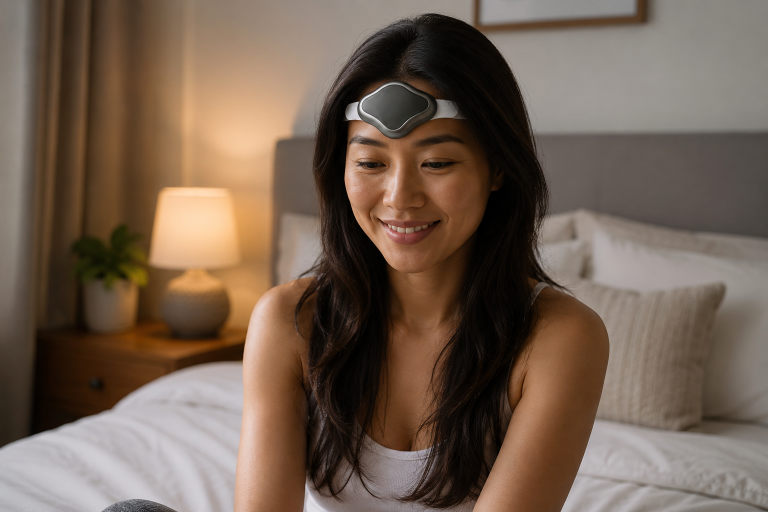
Cefaly attaches magnetically to a reusable adhesive electrode placed on the forehead, between and just above the eyebrows. The device delivers controlled electrical impulses through the skin to stimulate the upper branches of the trigeminal nerve, a major pathway involved in migraine pain.
Learn more about how Cefaly works.
Cefaly Clinical Evidence
Cefaly-specific evidence includes more than 20 years of research, more than 12 clinical trials, 18 peer-reviewed publications, and three pivotal randomized controlled trials. Reported outcomes on Cefaly’s clinical studies page include:
ACME Study, Acute Treatment
- 79% of patients experienced a significant reduction in headache pain after one hour of Acute treatment.
- 63% reported that one hour of treatment reduced their pain by half or more.
TEAM Study, Acute Treatment
- 56.4% reported resolution of their most bothersome migraine symptom after two hours of treatment.
- 67.3% of patients who identified nausea as their most bothersome symptom reported that it resolved.
- 42.5% reported resolution of all migraine symptoms after two hours.
PREMICE Study, Prevention
- Patients had a 32.7% decrease in headache days after three months of compliant daily Prevent treatment.
- 38.1% achieved a 50% or greater reduction in migraine days.
- Acute migraine medication intake decreased by 36.6% after three months.
Individual results vary, and clinical-study percentages should not be interpreted as a guarantee of response.
Key Advantages
- Dual treatment programs: One device provides a 60-minute Acute program and a 20-minute daily Prevent program.
- Prescription-free access: Cefaly is available without a prescription in the U.S., Canada, the EU, and other countries.
- No pharmacologic exposure: Because Cefaly is drug-free, it does not create drug-drug interactions or require drug metabolism.
- Reusable ownership model: The current U.S. product page lists Cefaly Connected at $509, with replacement electrodes as the primary recurring supply expense. Pricing may change.
- Established research history: Cefaly has been studied for both acute and preventive migraine treatment.
- Veteran resources: Eligible veterans can review Cefaly’s veterans program and discuss coverage through the VA healthcare system.
Treatment Programs
- Acute program: Use at the earliest sign of a migraine attack for a 60-minute session.
- Prevent program: Use daily for 20 minutes as a preventive treatment routine.
- Comfort adjustment: Stimulation intensity gradually increases during the first 14 minutes and can be stabilized at a comfortable level.
Safety and Contraindications
Cefaly clinical studies report no serious adverse effects. Reported device-related effects are generally minor and reversible and can include sleepiness, headache after a session, temporary forehead redness, nausea, or rare forehead skin allergy.
Do not use Cefaly if you have metallic or electronic implants in the head, a cardiac pacemaker, an implanted or wearable defibrillator, or pain of unknown origin. Talk to your healthcare provider before use if you are pregnant, breastfeeding, have a complex medical history, are changing medications, or are experiencing new or unusual symptoms.
2. Cold Therapy
A cold pack may provide temporary comfort by numbing the treatment area and reducing pain perception. Some people use cold therapy during migraine or tension-type headache, although the response varies.
How to Use Cold Therapy
- Wrap a cold pack or ice pack in a thin cloth.
- Apply it to the forehead, temples, back of the neck, or another comfortable area.
- Use it for approximately 10 to 20 minutes at a time.
- Remove it if the skin becomes painful, very numb, or irritated.
Cold therapy is a supportive measure, not a substitute for evaluation of a new, severe, or unusual headache.
3. Hydration
Dehydration can trigger or worsen headaches in some people. Drinking fluids may be useful when inadequate intake, heat, exercise, vomiting, diarrhea, or illness is contributing to symptoms.
Practical Hydration Steps
- Drink fluids regularly rather than relying on a rigid universal target.
- Increase fluid intake during heat, exercise, or illness as appropriate.
- Consider fluids containing electrolytes after prolonged sweating or gastrointestinal fluid loss.
- Avoid excessive intake, particularly if you have kidney, heart, or electrolyte-related medical conditions.
Hydration needs vary by body size, activity, climate, diet, pregnancy status, and medical history. Learn more about electrolytes and migraine and helpful migraine drinks.
4. Magnesium
Magnesium is one of the most commonly discussed supplements for migraine prevention. It may be particularly relevant for some people with migraine with aura or menstrually related migraine, but it is not an acute pain reliever and does not work for everyone.
Considerations
- Magnesium oxide is commonly used in migraine prevention studies and clinical practice.
- The appropriate form and dose depend on individual health needs and tolerance.
- Diarrhea and abdominal discomfort are common dose-related side effects.
- People with kidney disease should seek medical guidance before taking magnesium supplements.
- A preventive trial is usually assessed over several weeks or months rather than after one dose.
Review this migraine supplement guide and discuss supplementation with a healthcare provider.
5. Acupressure and Massage
Gentle acupressure, scalp massage, and neck or shoulder massage may help reduce muscle tension and provide temporary comfort, particularly when tension or prolonged posture contributes to headache symptoms. Evidence is mixed, and these techniques should be viewed as supportive rather than curative.
Commonly Used Areas
- The webbing between the thumb and index finger
- The base of the skull and upper neck
- The temples
- The scalp, jaw, shoulders, and upper back
Use firm but comfortable pressure and stop if symptoms worsen. People who are pregnant should ask a healthcare professional whether specific acupressure points should be avoided. See these pressure point techniques for additional guidance.
6. Caffeine
Caffeine has a variable relationship with headaches. A small amount may help some people during an attack and can enhance the effect of certain pain relievers. However, frequent or inconsistent intake can contribute to dependence, withdrawal headache, migraine triggering, or medication overuse when caffeine-containing combination products are used too often.
Practical Considerations
- Keep daily intake relatively consistent if you regularly consume caffeine.
- Avoid suddenly stopping a high daily intake.
- Pay attention to whether caffeine helps, worsens, or has no effect on your headaches.
- Consider caffeine from coffee, tea, energy drinks, soft drinks, chocolate, and combination medicines.
- Discuss frequent caffeine use with a healthcare provider if headaches are occurring often.
Individual thresholds vary. Learn more about caffeine and migraine.
7. Peppermint Oil
Diluted peppermint oil creates a cooling sensation and may help some people with tension-type headache. Evidence is limited, and it should not be presented as equivalent to acetaminophen or other established treatments.
Safer Topical Use
- Dilute peppermint essential oil in a carrier oil before applying it to the skin.
- Apply only a small amount to the temples or back of the neck.
- Keep it away from the eyes, mouth, broken skin, and sensitive areas.
- Stop using it if burning, rash, breathing symptoms, or irritation develops.
- Keep essential oils away from children and pets.
Explore this overview of essential oils.
8. Riboflavin
Riboflavin, or vitamin B2, has been studied as a preventive supplement for migraine. It supports cellular energy metabolism and is generally used consistently over time rather than during an active attack.
What to Know
- A daily dose of 400 mg has been studied for migraine prevention in adults.
- Benefits, when they occur, may take two to three months or longer to assess.
- Riboflavin can cause bright yellow urine and occasional digestive symptoms.
- Supplement quality and individual medical needs should be reviewed with a healthcare provider.
Riboflavin is a preventive option, not a replacement for urgent evaluation or appropriate acute treatment.
9. Coenzyme Q10
Coenzyme Q10, or CoQ10, is another supplement studied for migraine prevention. Some research suggests a possible reduction in migraine frequency, but the evidence is less extensive than for standard migraine treatments, and results vary.
What to Know
- CoQ10 is generally evaluated over several months of consistent use.
- It can cause digestive symptoms or insomnia in some people.
- It may interact with warfarin and insulin.
- Combining supplements should be discussed with a healthcare provider rather than assumed to be safe or more effective.
10. Ginger
Ginger is commonly used for nausea and digestive discomfort. Small studies have explored ginger for migraine symptoms, but the evidence remains limited and does not establish it as equivalent to prescription migraine medication.
Ways People Use Ginger
- Fresh ginger tea
- Ginger added to food
- Commercial ginger products or supplements
Food-level use is generally different from concentrated supplementation. Ginger supplements can cause heartburn or stomach upset and may affect bleeding risk, particularly when used with anticoagulant or antiplatelet medicines.
Building a Headache Management Toolkit
A practical headache or migraine plan may include several tools chosen for a specific diagnosis, trigger pattern, and medical history. A personalized migraine toolkit might include:
- Migraine-specific treatment: Cefaly for acute and preventive treatment in eligible adults
- Supportive comfort measures: Cold therapy, a quiet environment, or gentle massage
- Daily foundations: Consistent hydration, meals, sleep, and activity
- Preventive options: Clinician-guided magnesium, riboflavin, CoQ10, or other treatments
- Tracking: A headache diary that records symptoms, triggers, treatments, and response
In supported regions, the Cefaly app can track treatments, migraine symptoms, triggers, health data, and reports for healthcare visits. Cefaly Connected, the app, and coaching services are not currently available in the EU.
When to Consult a Healthcare Provider
Seek medical guidance for headaches that are frequent, worsening, difficult to control, or requiring acute medication more than a few days each week. A healthcare provider can help confirm whether symptoms are caused by migraine, tension-type headache, medication overuse, another headache disorder, or a secondary medical condition.
Seek urgent medical care for a sudden thunderclap headache, new weakness or numbness, difficulty speaking, fainting, confusion, seizure, fever with neck stiffness, severe headache after a head injury, or a major change in headache during pregnancy or the postpartum period.
Before using Cefaly or another neuromodulation device, review the device-specific contraindications and instructions. Before starting supplements, discuss pregnancy, breastfeeding, kidney or liver disease, bleeding risk, and current medicines with a healthcare provider.
Frequently Asked Questions
What are the safest drug-free alternatives to acetaminophen for frequent headaches?
There is no single safest option for every person or every headache type. For adults with migraine, Cefaly is a strong medication-free option because it is FDA-cleared for both acute and preventive treatment, does not create pharmacologic drug-drug interactions, and has been studied in more than 12 clinical trials. It still has device-specific contraindications and potential side effects, so eligibility should be reviewed before use. Cold therapy, hydration, and gentle massage may offer supportive relief for selected headaches.
How does Cefaly e-TNS compare with other neuromodulation devices?
Cefaly is an FDA-cleared e-TNS device available without a prescription in the U.S., Canada, the EU, and other countries. It combines a 60-minute Acute program and a 20-minute daily Prevent program in one reusable forehead device for adults. Other FDA-cleared neuromodulation devices use different nerve targets, placement areas, age indications, prescription requirements, and treatment programs. HeadaTerm 2 is another over-the-counter forehead stimulation device, but its FDA-cleared indication is preventive treatment rather than Cefaly’s combination of acute and preventive treatment. Review this explanation of e-TNS technology.
Can Cefaly be used with current migraine medications?
Because Cefaly is drug-free, it does not create pharmacologic drug-drug interactions. It may be discussed as one component of a broader migraine treatment plan. However, do not change or stop medication based only on device use. A healthcare provider should review treatment combinations, medical history, pregnancy or breastfeeding, and any implanted devices. In the PREMICE study, acute migraine medication intake decreased by 36.6% after three months of Prevent treatment, but this group-level finding does not guarantee that any individual will be able to reduce medication use.
Are these alternatives safe during pregnancy?
Pregnancy changes the safety assessment for medications, neuromodulation devices, supplements, essential oils, caffeine, and acupressure. Talk to an obstetric or headache healthcare professional before starting or changing any treatment. Drug-free does not automatically mean proven safe during pregnancy. Cefaly advises people who are pregnant, may be pregnant, or are breastfeeding to talk to a healthcare provider before use. Review the available pregnancy guide as a starting point for that discussion.
How long do medication-free alternatives take to work?
Timing depends on the option and the headache diagnosis. Cold therapy or gentle massage may feel soothing within minutes, but effects are often temporary. Cefaly’s Acute program lasts 60 minutes; in the ACME study, 79% of patients experienced a significant reduction in headache pain after one hour. Preventive Cefaly outcomes were evaluated after three months of daily use in the PREMICE study. Magnesium, riboflavin, and CoQ10 are preventive strategies that are generally assessed over several weeks or months. Individual response varies, and persistent or changing headaches should be evaluated rather than managed through repeated self-treatment alone.




Latest Posts

The Essential Guide To Medical Devices For Migraine
CEFALY is an FDA-cleared medical device that targets the main pathway for migraine pain: the trigeminal nerve (the…
Best Forehead Migraine Device in 2026
Migraine affects more than 40 million people in the United States. For adults who want a non-invasive option…

Best e-TNS Migraine Device in 2026
Migraine is a neurological disease that can affect work, sleep, family life, and daily routines. For people who…