



Best e-TNS Units for Migraine in 2026
Migraine affects more than 1 billion people worldwide. External trigeminal nerve stimulation (e-TNS) is a non-invasive form of neuromodulation that applies electrical stimulation through the skin to branches of the trigeminal nerve, the primary pathway for migraine pain.
Device indications, treatment formats, prescription requirements, app features, and ongoing supply needs vary. Cefaly combines FDA-cleared acute and preventive treatment in adults, over-the-counter access, two treatment programs, a forehead-worn format, and more than 20 years of research. Other neuromodulation devices may cover a narrower indication or use a different placement format.
This article provides high-level, informational details about e-TNS and related wearable neuromodulation devices available in 2026. It does not provide medical advice or replace individualized guidance from a healthcare provider.
Key Takeaways
- Cefaly covers acute and preventive treatment: Cefaly is FDA-cleared for the acute treatment of migraine with or without aura and the preventive treatment of migraine in adults age 18 and older
- Two Cefaly programs address different treatment goals: Acute is a 60-minute program, while Prevent is a 20-minute daily program
- Cefaly is available without a prescription: It is available without a prescription in the United States, Canada, the European Union, and other countries, although Cefaly Connected, the app, and coaching services are not currently available in the EU
- Cefaly has a substantial evidence base: Its clinical evidence includes more than 20 years of research, more than 12 clinical trials, 18 peer-reviewed publications, and three pivotal, prospective, multicenter, sham-controlled randomized controlled trials
- Other devices have different indications: HeadaTerm 2 is FDA-cleared for preventive treatment of episodic migraine in adults, while Relivion MG is a prescription headset cleared for acute migraine treatment in adults
What Is External Trigeminal Nerve Stimulation?
External trigeminal nerve stimulation uses electrodes placed on the skin to stimulate branches of the trigeminal nerve. With Cefaly, the electrode is positioned on the forehead, between and just above the eyebrows. The device attaches magnetically to the electrode and delivers controlled electrical stimulation during a treatment session.
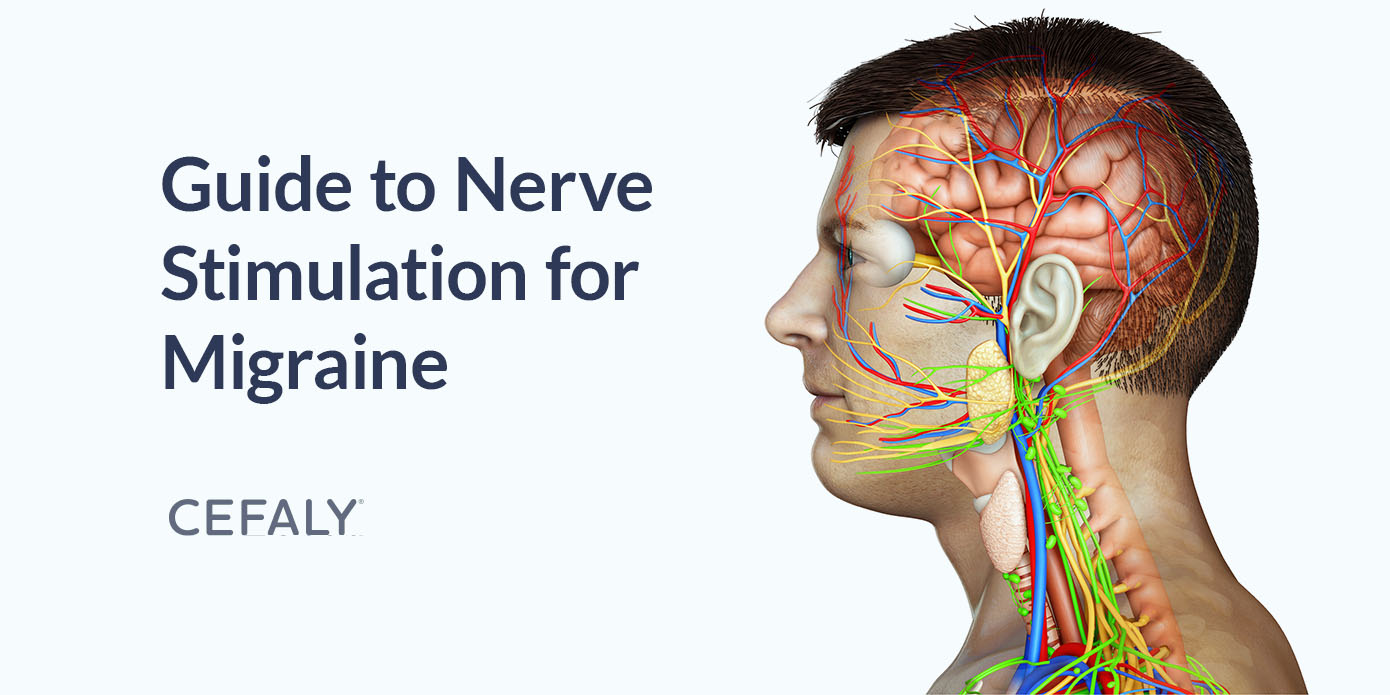
Cefaly targets the trigeminal nerve, the primary pathway for migraine pain. The nerve endings are located under the skin of the forehead, allowing stimulation without surgery or an implanted component. The precise biological mechanisms involved in migraine neuromodulation continue to be studied, so e-TNS is best understood by its FDA-cleared indications and demonstrated clinical outcomes rather than by claims that it permanently “resets” or “normalizes” nerve activity.
Cefaly includes two treatment programs:
- Acute: A 60-minute program for the acute treatment of migraine with or without aura in adults
- Prevent: A 20-minute daily program for the preventive treatment of migraine in adults
Key Differences Among Migraine Neuromodulation Devices
Migraine neuromodulation devices are not interchangeable. Important distinctions include:
- Indication: A device may be cleared for acute treatment, preventive treatment, or both
- Access: Some devices are available over the counter, while others require a prescription
- Placement: Devices may use a forehead electrode or a headset that contacts both the forehead and the back of the head
- Treatment format: Session duration, frequency, and controls vary by device
- Connectivity: Some devices include app-based controls, treatment logs, wearable integrations, or clinician-facing data tools
- Ongoing supplies: Adhesive electrodes or other replaceable components may create recurring costs
- Support: Coaching, customer service, return policies, and provider networks vary by manufacturer
FDA clearance is specific to the indication, intended population, and prescription status listed for each device. A 510(k) clearance generally reflects substantial equivalence to a legally marketed device rather than a universal ranking of clinical evidence across products.
1. Cefaly
Format: Forehead-worn e-TNS device with Bluetooth connectivity
FDA-cleared indications: Acute treatment of migraine with or without aura and preventive treatment of migraine in adults age 18 and older
Access: No prescription required
Listed price: $509 before discounts or promotions at the time of review
Cefaly combines the Acute and Prevent programs with Bluetooth access to the Cefaly Migraine Relief app. Cefaly became the first FDA-cleared migraine treatment device for prevention in 2014, received clearance for acute treatment in 2017, and became available over the counter in 2020.
Key Features
- Acute program: 60-minute treatment session
- Prevent program: 20-minute daily treatment session
- App controls: Program selection, intensity adjustment, and session monitoring through the Cefaly app
- Migraine tracking: Logs for attacks, symptoms, warning signs, triggers, and treatments
- Wearable integration: Connections with Apple Health, Google Health, Fitbit, Oura, Garmin, and other supported platforms
- Reports: Personalized summaries that can be shared with a healthcare provider
- Rechargeable design: Approximately four hours for a full initial charge
- Electrode attachment: Magnetic connection to a disposable forehead electrode
Cefaly is available without a prescription in the United States, Canada, the EU, and other countries. The Cefaly Connected device, Cefaly Migraine Relief app, and coaching services are not currently available in the EU.
Pricing and Return Policy
Qualifying Cefaly devices and products purchased directly from the official website are covered by a 90-day satisfaction guarantee. A product may be returned for a refund within 90 calendar days of its delivery date when the policy requirements are met. Purchases made through third-party sellers are subject to the seller’s return terms.
Cefaly devices and electrodes are HSA/FSA eligible. Cefaly also lists payment options through Affirm and PayPal.
Cefaly Clinical Evidence
Cefaly is supported by more than 20 years of research, more than 12 clinical trials, 18 peer-reviewed publications, and three pivotal, prospective, multicenter, sham-controlled randomized controlled trials.
ACME Study: Acute Migraine Treatment
The ACME trial was a multicenter, double-blind, randomized, sham-controlled study evaluating Cefaly for acute migraine treatment.
- 79% of patients had a significant reduction in headache pain after one hour of Cefaly Acute treatment
- 63% reported that one hour of Acute treatment reduced their pain by at least half
TEAM Study: Acute Symptoms
The TEAM study was a Phase 3, multicenter, randomized, double-blind, sham-controlled trial that enrolled 538 adults and evaluated a two-hour Cefaly treatment during a qualifying migraine attack.
- 56.4% reported resolution of their most bothersome migraine symptom after two hours
- 67.3% of participants who identified nausea as their most bothersome symptom reported resolution of nausea
- 42.5% reported resolution of all migraine symptoms after two hours of Acute treatment
PREMICE Study: Migraine Prevention
The PREMICE trial evaluated daily 20-minute preventive treatment over three months.
- 32.7% decrease in headache days among patients after three months of compliant Prevent treatment
- 36.6% decrease in acute migraine medication intake after three months of Prevent treatment
- 74.4% decrease in acute medication intake among participants who responded to Cefaly Prevent treatment
Clinical-trial results describe outcomes in study populations and do not guarantee the same result for every individual.
Cefaly Safety and Tolerability
Cefaly clinical studies reported no serious adverse effects associated with Cefaly treatment. Reported adverse effects were minor and reversible after treatment stopped.
Reported effects include:
- Common: Sleepiness and headache after a session
- Uncommon: Forehead skin redness and nausea
- Rare: Forehead skin allergy
In a published survey of 2,313 users, 4.3% reported adverse events. None was serious, and the reported events were minor and fully reversible.
Cefaly safety information lists contraindications that include implanted metallic or electronic devices in the head, a cardiac pacemaker, an implanted or wearable defibrillator, and pain of unknown origin. Current device manuals contain additional warnings, precautions, and contraindications. Individual questions about device suitability or a complex medical history are addressed by a healthcare provider.
Medication risks and contraindications vary by product and individual circumstances. Cefaly provides a drug-free treatment option, but “drug-free” does not mean that every user will stop medication. Medication decisions remain individualized.
Cefaly App, Electrodes, and Support
Cefaly Migraine Relief App
The Cefaly app is the companion application for Cefaly Connected. It provides:
- Real-time Acute and Prevent program controls
- Intensity adjustment and session monitoring
- Treatment, symptom, and migraine logging
- Health wearable synchronization
- Barometric pressure information
- Personalized reports for reviewing migraine patterns over time
The app can help organize self-reported information, but logged associations do not by themselves establish that a particular factor caused a migraine attack.
Electrodes
Cefaly uses disposable adhesive electrodes positioned on the forehead. Standard and hypoallergenic options are available. The electrode subscription supports delivery every 30, 60, or 90 days, with the schedule selected by the customer. Electrode lifespan varies with use, storage, skin characteristics, and handling.
Coaching and Customer Support
Cefaly provides free one-on-one coaching for device setup, treatment controls, intensity adjustment, app use, and electrode care. Cefaly coaches do not diagnose migraine or provide medical advice. Cefaly also maintains a certified provider network and customer support resources.
Customer Experiences
Individual experiences vary. Cefaly’s product reviews page provides attributed first-person accounts from customers rather than unattributed testimonial quotations.
2. HeadaTerm 2
Format: Rechargeable forehead-worn electrical nerve stimulation device
FDA-cleared indication: Prophylactic treatment of episodic migraine in adults age 18 and older
Access: Over-the-counter
Listed price: $139.99 on the manufacturer’s website at the time of review
HeadaTerm 2 received FDA clearance as an OTC device for the preventive treatment of episodic migraine in adults. Its FDA summary describes stimulation of the supraorbital and supratrochlear nerves through a forehead electrode.
HeadaTerm 2 Features
- Nine manually controlled intensity levels
- Rechargeable battery
- Forehead placement
- OTC access
- Preventive indication for episodic migraine in adults
The FDA-cleared indication is preventive, not acute migraine treatment.
3. Relivion MG
Format: Headset with electrodes positioned at the forehead and occiput
FDA-cleared indication: Acute treatment of migraine with or without aura in adults age 18 and older
Access: Prescription required
Relivion MG is an external, non-invasive neuromodulation headset. Its FDA clearance covers acute migraine treatment in adults and identifies it as a prescription device for self-use at home.
The headset integrates three pairs of electrodes that contact the scalp at the forehead and occiput. This placement stimulates branches of the trigeminal and greater occipital nerves. Relivion also offers a patient app for treatment tracking and a clinician-facing interface for reviewing transmitted treatment information.
Relivion MG Features
- Prescription headset format
- Acute migraine indication in adults
- Forehead and occipital electrode placement
- Adjustable stimulation intensity
- Patient app and migraine diary
- Optional clinician data interface
Relivion’s FDA-cleared indication does not establish it as a required next step after another e-TNS device or as a treatment specifically for people who did not respond to forehead-only stimulation.
Frequently Asked Questions
Is Cefaly available without a prescription?
Yes. Cefaly is available without a prescription in the United States, Canada, the EU, and other countries. Cefaly Connected, the Cefaly Migraine Relief app, and coaching services are not currently available in the EU. Regional product availability can differ even when the broader Cefaly brand is available.
What is the difference between Cefaly Acute and Prevent?
Acute is a 60-minute treatment program for use within Cefaly’s acute migraine indication. Prevent is a 20-minute daily program for preventive treatment. Both programs are available on Cefaly Connected and Cefaly Enhanced.
Can an e-TNS device replace migraine medication?
An e-TNS device does not automatically replace medication. Some Cefaly studies reported reductions in acute medication use, but individual treatment plans vary. Medication changes remain individualized clinical decisions rather than an expected result of purchasing a device.
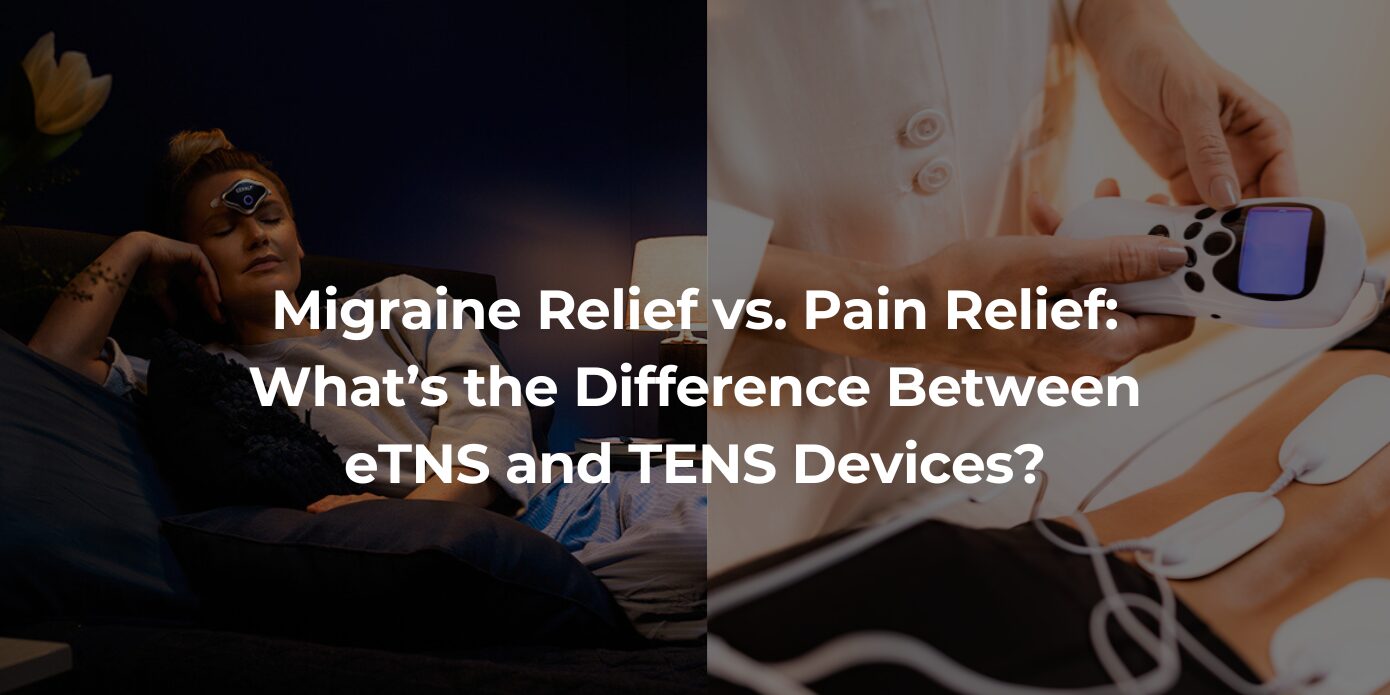
What is the difference between e-TNS and general TENS?
TENS is a broad term for transcutaneous electrical nerve stimulation. E-TNS refers specifically to external stimulation targeting branches of the trigeminal nerve. For migraine devices, the relevant details are the FDA-cleared indication, intended placement, device instructions, and safety information.
What side effects have been reported with Cefaly?
Cefaly reports sleepiness and post-session headache as common effects, forehead redness and nausea as uncommon effects, and forehead skin allergy as rare. Cefaly clinical studies reported no serious adverse effects associated with treatment. Reported adverse effects were minor and reversible after stopping treatment.
Does Cefaly cure migraines?
No, there is no cure for migraine, but Cefaly helps provide migraine relief. It is FDA-cleared for acute migraine treatment and migraine prevention in adults, and individual results vary.
How do Cefaly Connected and Cefaly Enhanced differ?
Both models provide the 60-minute Acute and 20-minute Prevent programs. Cefaly Connected adds Bluetooth connectivity and integration with the Cefaly Migraine Relief app. Cefaly Enhanced operates as a standalone device without app connectivity. A healthcare provider can explain how a device’s cleared indication, contraindications, and treatment format relate to an individual migraine history.




Latest Posts

The Essential Guide To Medical Devices For Migraine
CEFALY is an FDA-cleared medical device that targets the main pathway for migraine pain: the trigeminal nerve (the…
Ubrelvy Alternatives for Migraine Relief
Ubrelvy (ubrogepant) is a prescription calcitonin gene-related peptide (CGRP) receptor antagonist that the FDA initially approved in 2019…

Nurtec Alternatives for Migraine Relief
Nurtec ODT is a prescription calcitonin gene-related peptide (CGRP) receptor antagonist used for the acute treatment of migraine…