




Emgality Alternatives for Migraine Prevention
Emgality (galcanezumab) is a prescription CGRP-targeting injection used for migraine prevention, but it may not suit every person’s treatment goals, health history, budget, or preferred treatment format. People exploring alternatives may consider another CGRP-targeting medication, a longstanding preventive medicine, an in-office procedure, lifestyle support, or a drug-free option.
Cefaly stands out as a prescription-free, FDA-cleared external trigeminal nerve stimulation (e-TNS) device that provides both acute migraine treatment and daily prevention in one reusable system. The best alternative still depends on migraine pattern, medical history, current medications, access, and individual preferences. A healthcare provider can help determine how each option fits into a personalized treatment plan.
Key Takeaways
- Cefaly combines acute and preventive treatment: The device offers a 60-minute Acute program for use during a migraine attack and a 20-minute daily Prevent program for migraine prevention.
- Cefaly is drug-free and prescription-free: It does not add medication exposure and can be purchased without a prescription in the United States.
- Medication alternatives come in several formats: Options include monthly or quarterly injections, daily or every-other-day oral medications, and periodic intravenous infusions.
- Longstanding preventives remain relevant: Beta-blockers, anti-seizure medications, and certain antidepressants may still be considered based on a person’s health profile and treatment history.
- Direct comparisons require caution: Clinical studies for different migraine treatments use different populations, designs, endpoints, and follow-up periods, so results should not be treated as head-to-head evidence.
1. Cefaly
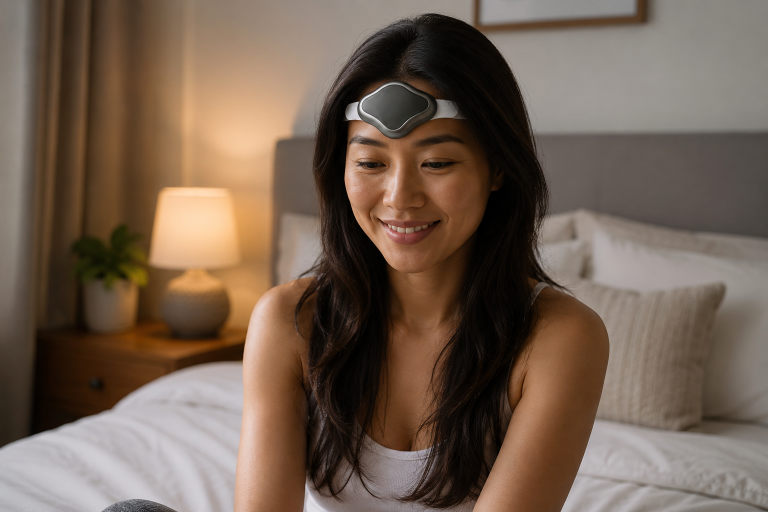
Cefaly is an FDA-cleared, prescription-free neuromodulation device for the acute and preventive treatment of migraine in adults. It became the first medical device cleared by the FDA for migraine prevention in 2014 and uses e-TNS to stimulate branches of the trigeminal nerve through an electrode placed on the forehead.
Unlike Emgality, Cefaly does not deliver a medication. It provides two treatment programs in one reusable Cefaly device:
- Acute program: A 60-minute session used during a migraine attack
- Prevent program: A 20-minute session used every day for migraine prevention
Why Cefaly Stands Out
- Drug-free treatment without added medication exposure
- Acute and preventive programs in one device
- No prescription or prior authorization required for direct purchase
- Reusable device with replaceable forehead electrodes
- Adjustable stimulation intensity
- HSA/FSA eligible for eligible users
- Free one-on-one support from a Cefaly Coach where available
- Treatment control and tracking through the Cefaly app where available
Cefaly’s current clinical studies page reports that 79% of patients in the ACME study experienced a significant reduction in headache pain after one hour of Acute treatment. Cefaly also reports that 38.1% of patients achieved at least a 50% decrease in migraine days after three months of Prevent treatment. These findings are specific to Cefaly and should not be used as a direct comparison with studies of Emgality or other treatments.
The current U.S. list price for the Cefaly device is $509. Replacement electrodes are the main recurring expense, and actual long-term cost depends on electrode type, reuse, treatment frequency, promotions, taxes, and shipping.
Cefaly also offers a satisfaction guarantee for eligible products purchased directly from cefaly.com. Under the published return policy, customers who are not satisfied may return the product within 90 calendar days of delivery. This is a refund policy, not a guarantee of a particular clinical result.
The Cefaly Migraine Relief app, Cefaly Connected device, and coaching services are not currently available in the EU. Product features and support services vary by region.
Cefaly May Be Worth Discussing When You
- Prefer a drug-free treatment format
- Want acute relief and daily prevention in one system
- Have difficulty tolerating preventive medications
- Want an option that does not require a prescription for purchase
- Prefer owning a reusable device rather than relying on a recurring medication supply
- Want to discuss adding a non-pharmaceutical option to an existing treatment plan
Cefaly does not cure migraine, and individual results vary. Review the instructions, contraindications, and precautions before use. People who are pregnant, may become pregnant, or are breastfeeding should speak with a healthcare provider before using Cefaly or changing migraine treatment. Cefaly states that its safety and efficacy have not been evaluated in pregnant women.
2. Aimovig
Aimovig (erenumab) is a prescription monoclonal antibody that blocks the CGRP receptor. It is used for the preventive treatment of migraine in adults.
Key Features
- Monthly subcutaneous injection
- Available in 70 mg and 140 mg doses
- Preventive treatment only
- Can be self-administered after appropriate instruction
- Requires a prescription
Aimovig may appeal to adults who prefer a monthly injection and whose healthcare provider considers CGRP-receptor blockade appropriate. Its prescribing information includes warnings and precautions related to constipation, hypertension, hypersensitivity, and Raynaud’s phenomenon. Treatment selection should account for medical history and current medications.
3. Ajovy
Ajovy (fremanezumab) is a prescription monoclonal antibody that targets CGRP. It is used for the preventive treatment of migraine in adults.
Key Features
- Subcutaneous injection
- Available as 225 mg monthly or 675 mg every three months
- Preventive treatment only
- Available in prefilled autoinjector and syringe formats
- Can be self-administered after appropriate instruction
- Requires a prescription
Ajovy may appeal to adults who want a choice between monthly and quarterly dosing. Its prescribing information includes warnings and precautions related to hypersensitivity, hypertension, and Raynaud’s phenomenon. A healthcare provider can determine whether the dosing schedule and safety profile are appropriate based on medical history and current medications.
4. Vyepti
Vyepti (eptinezumab) is a prescription monoclonal antibody that targets CGRP. It is used for the preventive treatment of migraine in adults and is administered by intravenous infusion.
Key Features
- Intravenous infusion every three months
- Recommended dose of 100 mg, with 300 mg used for some patients
- Infused over approximately 30 minutes
- Administered by a healthcare professional
- Preventive treatment only
- Requires a prescription
Vyepti may appeal to adults who prefer periodic professional administration instead of self-injection or daily oral medication. Its prescribing information includes warnings and precautions related to hypersensitivity, constipation with serious complications, hypertension, and Raynaud’s phenomenon. Treatment planning should also account for infusion access, medical history, and insurance requirements.
5. Qulipta
Qulipta (atogepant) is a prescription oral CGRP receptor antagonist. It is used for the preventive treatment of episodic and chronic migraine in adults.
Key Features
- Once-daily oral tablet
- Available in 10 mg, 30 mg, and 60 mg strengths
- Preventive treatment only
- Dosing may vary by migraine type, kidney function, and interacting medications
- Requires a prescription
Qulipta may appeal to adults who want CGRP-targeted prevention without injections or infusions. Its prescribing information includes warnings and precautions related to hypersensitivity, hypertension, and Raynaud’s phenomenon. A healthcare provider should review kidney and liver function, current medications, and other individual factors before selecting a dose.
6. Nurtec ODT
Nurtec ODT (rimegepant) is a prescription oral CGRP receptor antagonist. It is used for the acute treatment of migraine with or without aura and the preventive treatment of episodic migraine in adults.
Key Features
- 75 mg orally disintegrating tablet
- Taken as needed for acute treatment
- Taken every other day for preventive treatment
- Provides both acute and preventive indications
- Requires a prescription
Nurtec ODT may appeal to adults who prefer an oral treatment and want to discuss one medication with both acute and preventive uses. Its prescribing information includes warnings and precautions related to hypersensitivity, hypertension, and Raynaud’s phenomenon. Treatment selection should also account for drug interactions and kidney or liver impairment.
7. Traditional Preventive Medications
Traditional preventive medications include beta-blockers, anti-seizure medications, and certain antidepressants. Some are FDA approved for migraine prevention, while others may be prescribed off-label based on clinical judgment.
Key Features
- Usually taken orally on a regular schedule
- May include propranolol, metoprolol, topiramate, divalproex, amitriptyline, or venlafaxine
- Primarily used for prevention rather than acute relief
- Many are available as lower-cost generics
- Require a prescription
Traditional preventive medications may appeal to people who prefer established oral treatments or have another condition that a particular medication may also address. Safety considerations vary substantially by drug and may involve blood pressure, mood, cognition, pregnancy, kidney or liver function, and medication interactions. A healthcare provider should guide selection, dosing, and any treatment changes.
8. Botox
Botox (onabotulinumtoxinA) is a prescription treatment injected into muscles to help prevent headaches in adults with chronic migraine. Chronic migraine is defined for this indication as 15 or more headache days per month, with headaches lasting four hours a day or longer.
Key Features
- In-office injection procedure
- Typically administered across 31 injection sites in seven head and neck muscle areas
- Repeated every 12 weeks
- Preventive treatment for chronic migraine only
- Administered by a trained healthcare professional
- Requires a prescription
Botox may appeal to adults with chronic migraine who prefer a periodic office-based procedure. Its prescribing information carries a boxed warning about the possible distant spread of toxin effect and includes precautions involving swallowing or breathing difficulties, neuromuscular conditions, and other botulinum toxin products. Treatment selection should account for medical history and current medications.
Some people use Cefaly as part of a broader plan that also includes Botox. Anyone considering this approach should discuss Cefaly with Botox with a qualified healthcare provider.
9. Other Neuromodulation Devices
Other neuromodulation devices use electrical or magnetic stimulation to influence nerve pathways involved in migraine. Examples include Nerivio, gammaCore, Relivion MG, and Enso for Migraine.
Key Features
- Device placement may involve the upper arm, neck, head, or other treatment areas
- Acute and preventive indications vary by device
- Prescription requirements and approved age ranges vary
- Treatment schedules, app requirements, and supply models differ
- Some devices involve recurring treatment or subscription costs
Other neuromodulation devices may appeal to people who prefer a non-pharmaceutical approach but want a different treatment location or stimulation method. Enso for Migraine received FDA clearance in April 2026 as an over-the-counter device for acute and preventive migraine treatment in adults, so prescription-free access is no longer unique to Cefaly. Device-specific contraindications, precautions, instructions, and access requirements should be reviewed with a healthcare provider.
Cefaly remains differentiated by its established e-TNS approach, forehead placement, 60-minute Acute program, 20-minute daily Prevent program, reusable ownership model, prescription-free access, and optional app and coaching support where available. Learn more about how Cefaly works.
10. Supplements and Lifestyle Strategies
Supplements and lifestyle strategies may be used as supportive components of a broader migraine-management plan. They are not substitutes for diagnosis, prescribed treatment, or medical evaluation.
Key Features
- Commonly discussed supplements include magnesium, riboflavin, and coenzyme Q10
- Lifestyle measures may include regular sleep, meals, hydration, physical activity, and stress management
- Symptom and trigger tracking may support treatment discussions
- Benefits and appropriate doses vary by individual
- Supplements may cause side effects or interact with medications
Supplements and lifestyle strategies may appeal to people who want to strengthen daily migraine-management routines alongside a device, medication, or procedure. A healthcare provider or pharmacist should review supplement selection and dosing, especially during pregnancy or breastfeeding or for people with kidney disease, heart conditions, blood-pressure concerns, or multiple medications. Cefaly’s guide to migraine supplements provides additional high-level information.
Helpful lifestyle measures can include maintaining a consistent sleep schedule, eating regular meals, staying hydrated, building sustainable physical activity, using mindfulness practices, and tracking possible migraine triggers.
How the Alternatives Differ
Choosing an Emgality alternative is not only about efficacy. Practical differences can strongly affect whether a person can use a treatment consistently.
Treatment Format
Cefaly is a wearable forehead device. Aimovig and Ajovy are subcutaneous injections. Vyepti is an intravenous infusion. Qulipta and Nurtec ODT are oral medications. Botox is an in-office injection procedure.
Acute and Preventive Use
Cefaly includes separate Acute and Prevent programs in one device. Nurtec ODT also has acute and preventive indications, although its medication dosing differs by use. Most other options in this guide are primarily preventive.
Prescription and Access
Cefaly is available without a prescription in the United States. The medications and Botox discussed here require a prescription, while other neuromodulation-device requirements vary. Insurance coverage, prior authorization, pharmacy access, and regional availability can affect treatment choice.
Medication Exposure
Cefaly is drug-free and does not add medication exposure. Prescription medicines can have systemic effects, interactions, contraindications, and monitoring needs that vary by treatment and patient.
Cost Structure
Cefaly has an upfront device cost plus replacement electrodes. Prescription medications and procedures may involve recurring pharmacy, infusion, administration, or appointment costs. Actual out-of-pocket spending varies too widely to support a universal five-year comparison.
Choosing an Emgality Alternative
A practical treatment discussion can start with several questions:
- Are you looking for prevention only, or both acute and preventive treatment?
- Do you prefer a device, pill, self-injection, infusion, or office procedure?
- Are medication side effects or drug interactions a major concern?
- Can you follow a daily routine, or would less frequent treatment be easier?
- What does your insurance cover, and what authorization steps apply?
- Are you pregnant, planning pregnancy, or breastfeeding?
- Do you have implanted devices, cardiovascular conditions, or other factors that affect treatment safety?
Cefaly offers a particularly practical option for adults seeking drug-free, prescription-free migraine treatment with both acute and preventive programs. Still, treatment should be individualized. A healthcare provider can help build a migraine treatment plan that reflects symptoms, health history, preferences, and access.
Frequently Asked Questions
What are the main alternatives to Emgality?
Alternatives include other CGRP-targeting medications, traditional preventive medicines, Botox for chronic migraine, neuromodulation devices such as Cefaly, and supportive supplement or lifestyle strategies. The appropriate category depends on migraine type, treatment goals, medical history, preferred format, and access.
How does Cefaly differ from Emgality?
Cefaly is a drug-free e-TNS device that stimulates the trigeminal nerve through a forehead electrode. It provides a 60-minute Acute program and a 20-minute daily Prevent program and is available without a prescription in the United States. Emgality is a prescription CGRP-targeting injection used for migraine prevention. Because Cefaly and Emgality were studied in different trials, their outcomes should not be presented as a head-to-head efficacy comparison.
Is Cefaly the only over-the-counter migraine neuromodulation device?
No. Cefaly is an FDA-cleared, prescription-free device for acute and preventive migraine treatment in adults, but Enso for Migraine also received over-the-counter FDA clearance for acute and preventive treatment in adults in April 2026.
Can Cefaly be used with migraine medication?
Cefaly is drug-free and does not add medication exposure. However, the appropriateness of any combined treatment plan depends on the person’s diagnoses, medications, supplements, implanted devices, pregnancy considerations, and other health factors. A healthcare provider should guide treatment combinations and medication changes.
Can Cefaly be used during pregnancy or breastfeeding?
People who are pregnant, may become pregnant, or are breastfeeding should consult a healthcare provider before using Cefaly or changing any migraine treatment. Cefaly states that its safety and efficacy have not been evaluated in pregnant women. Additional information is available in Cefaly’s article on pregnancy safety.
What side effects can occur with Cefaly?
Cefaly’s clinical information lists sleepiness and headache after a session as common effects, forehead skin redness and nausea as uncommon, and forehead skin allergy as rare. Reported effects are generally minor and reversible after stopping treatment. Users should follow the device instructions and contact a healthcare professional about concerning or persistent symptoms.
Does Cefaly guarantee migraine relief?
No migraine treatment works for everyone, and Cefaly does not cure migraine. Its 90-day satisfaction guarantee applies to eligible direct purchases and concerns returns and refunds; it does not guarantee a specific clinical outcome.





Latest Posts

The Essential Guide To Medical Devices For Migraine
CEFALY is an FDA-cleared medical device that targets the main pathway for migraine pain: the trigeminal nerve (the…
Best Forehead Migraine Device in 2026
Migraine affects more than 40 million people in the United States. For adults who want a non-invasive option…

Best e-TNS Migraine Device in 2026
Migraine is a neurological disease that can affect work, sleep, family life, and daily routines. For people who…