




Qulipta Alternatives for Migraine Prevention
Qulipta (atogepant) is a once-daily oral calcitonin gene-related peptide (CGRP) receptor antagonist indicated for the preventive treatment of migraine in adults. Some people explore alternatives because of side effects, medication interactions, insurance requirements, cost, treatment format, or a preference for a drug-free approach.
This guide reviews seven high-level alternatives and complementary approaches. Cefaly ranks first for adults prioritizing a drug-free, non-invasive, prescription-free, reusable option that provides both acute migraine treatment and daily prevention in one device. That position is based on treatment scope, access, practical use, and Cefaly-specific clinical evidence rather than an unsupported head-to-head claim of clinical superiority.
Key Takeaways
- Cefaly combines acute and preventive treatment: The device provides a 60-minute Acute program during a migraine attack and a 20-minute daily Prevent program for preventive treatment.
- Cefaly has device-specific clinical evidence: In the PREMICE study, consistent preventive use was associated with a 32.7% decrease in monthly headache days, and 38.1% of participants achieved at least a 50% reduction in migraine days after three months. In the ACME study, 79% of participants experienced significant headache pain reduction after one hour of acute treatment.
- Cefaly is prescription-free: It is available without a prescription in the U.S., Canada, the EU, and other countries, although specific products and support services can vary by region.
- Costs follow an ownership model: The current U.S. device price is $509, with replacement electrodes as the primary recurring expense. Actual long-term cost depends on treatment frequency, electrode care, promotions, and purchasing options.
- Medication and device alternatives differ substantially: Prescription status, approved indication, dosing schedule, administration method, potential adverse effects, insurance coverage, and ongoing costs should all be reviewed.
Understanding Qulipta
Qulipta prescribing information identifies atogepant as a CGRP receptor antagonist for the preventive treatment of migraine in adults. It is taken once daily, with the recommended dose depending on whether treatment is for episodic or chronic migraine and whether certain interacting medications or health conditions are present.
The most common adverse reactions listed in the prescribing information are nausea, constipation, and fatigue or sleepiness. The label also includes dosage considerations involving CYP3A4 inhibitors, CYP3A4 inducers, and OATP inhibitors. Pregnancy, breastfeeding, kidney function, liver function, and other individual factors may also affect treatment decisions.
These considerations do not make Qulipta inappropriate. They explain why some adults compare medication-based prevention with devices, other CGRP-targeting treatments, established oral preventives, clinician-administered treatments, and non-pharmaceutical support strategies.
1. Cefaly
Cefaly is an FDA-cleared external trigeminal nerve stimulation device for the acute treatment of migraine with or without aura in adults and the preventive treatment of episodic migraine in adults. It received its first U.S. preventive clearance in 2014, acute-treatment clearance in 2017, and over-the-counter clearance in 2020. Its company history provides additional background on the technology’s development.
How Cefaly Works
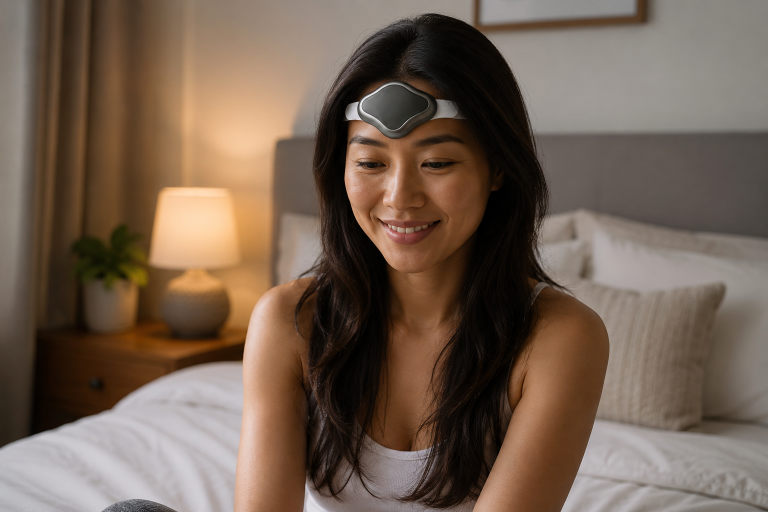
The trigeminal nerve is located under the skin of the forehead and is a primary pathway involved in migraine pain. Cefaly delivers small electrical impulses through an electrode positioned on the forehead, between and just above the eyebrows. The device attaches magnetically to the electrode and stimulates nerve endings through external trigeminal nerve stimulation, or e-TNS.
The mechanism of action differs from Qulipta’s CGRP receptor blockade because Cefaly uses targeted electrical stimulation rather than introducing medication into the body.
Treatment Programs
- Acute program: A 60-minute session used during a migraine attack
- Prevent program: A 20-minute session used daily for preventive treatment
- Reusable format: The device is purchased once and used with replaceable forehead electrodes
- Prescription-free access: No prescription is required in the U.S., Canada, the EU, and other countries
- Optional digital support: The Cefaly app can control compatible treatments, track sessions and attacks, sync supported wearable data, and generate reports to share with a healthcare provider where available
Cefaly Clinical Evidence
Cefaly’s clinical studies include research on both acute and preventive treatment.
In the PREMICE randomized, sham-controlled prevention study, participants using Cefaly consistently experienced a 32.7% decrease in monthly headache days after three months. The study also reported that 38.1% achieved at least a 50% reduction in migraine days, compared with 12.1% in the sham group, and that acute migraine medication intake decreased by 36.6% in the Cefaly group.
In the ACME acute-treatment study, 79% of participants experienced significant headache pain reduction after one hour of treatment, and the average reduction in migraine pain was 59% after the session. These results are specific to the studied Cefaly populations and protocols. Individual results vary.
Safety and Tolerability
Cefaly does not introduce medication into the body, so it does not create the same pharmacokinetic drug-interaction considerations as an oral preventive.
Reported Cefaly side effects are generally minor and reversible after stopping treatment. Common effects include sleepiness after a session and a headache after a Prevent session. Uncommon effects include temporary forehead redness and nausea. Forehead skin allergy is rare, and some users may find the stimulation uncomfortable.
People should review the device instructions, contraindications, warnings, and precautions before use. A healthcare provider can help determine whether Cefaly is appropriate for an individual’s migraine diagnosis and medical history.
Access, Cost, and Support
The current U.S. price shown for the Cefaly device is $509. Replacement electrodes are the main recurring supply cost, and Cefaly materials estimate that ongoing electrode expenses can vary based on use and electrode care. The device is also listed as HSA/FSA eligible, although plan rules should be confirmed with the relevant benefits administrator.
If you are not satisfied with Cefaly, you can return the device for a refund within 90 calendar days of your product delivery date when purchased directly from the official website. Review the complete return policy for eligibility and return instructions.
Free Cefaly coaching can help with first-time setup, treatment intensity, app use, troubleshooting, and electrode care. Cefaly coaches do not diagnose migraines or provide medical advice.
2. Injectable or Infused CGRP Monoclonal Antibodies
CGRP monoclonal antibodies are prescription preventive treatments that target either CGRP or its receptor. Options include Aimovig, Ajovy, Emgality, and Vyepti.
Key characteristics include the following:
- Administration by self-injection or intravenous infusion, depending on the product
- Dosing schedules that may be monthly, quarterly, or based on an infusion schedule
- Prescription and insurance requirements
- Product-specific contraindications, warnings, and adverse effects
- Ongoing medication access rather than a reusable-device ownership model
These treatments can be relevant for people who prefer less frequent dosing than a daily tablet or whose healthcare provider recommends a CGRP-targeting preventive. Their administration method, insurance rules, and safety information differ from both Qulipta and Cefaly.
3. Nurtec ODT (Rimegepant)
Nurtec ODT prescribing information lists two adult indications: acute treatment of migraine with or without aura and preventive treatment of episodic migraine.
For prevention, the labeled dose is 75 mg every other day. For acute treatment, it is taken as needed within the labeled dosing limits. Nurtec ODT is a prescription oral CGRP receptor antagonist, so its access, interaction profile, warnings, and adverse effects differ from Cefaly’s drug-free e-TNS approach.
This option may be relevant for adults who prefer an orally dissolving medication and want one prescription product with both acute and preventive indications. A prescribing healthcare provider should assess its fit with other medications and health conditions.
4. Traditional Oral Preventive Medications
Several established prescription medications are used for migraine prevention even though many were originally developed for other conditions. The main categories include the following:
- Beta-blockers, such as propranolol or metoprolol
- Antiseizure medications, such as topiramate
- Tricyclic antidepressants, such as amitriptyline
- Blood-pressure medications, such as candesartan
These options differ in dosing, monitoring needs, contraindications, and potential adverse effects. Some may be available as lower-cost generics, but the most appropriate medication depends on migraine type, other health conditions, current medications, pregnancy considerations, and individual tolerability.
Unlike Cefaly, these treatments involve systemic medication exposure and require a prescription. Cefaly remains the more direct fit for adults whose priority is a reusable, non-invasive, drug-free device with both acute and preventive programs.
5. OnabotulinumtoxinA
OnabotulinumtoxinA is a clinician-administered prescription treatment used for chronic migraine prevention. Treatment involves injections at specific head and neck sites on a recurring schedule.
This approach differs from Qulipta because it is administered in a clinical setting rather than taken daily at home. It also differs from Cefaly because Cefaly is self-administered, non-invasive, reusable, and available without a prescription.
OnabotulinumtoxinA is primarily relevant to chronic migraine, while Cefaly’s preventive FDA clearance is for episodic migraine in adults. A healthcare provider can determine which indication and treatment format best match a person’s diagnosis.
6. Other Neuromodulation Devices
Other non-invasive neuromodulation devices use different stimulation targets and placement methods. Examples include upper-arm remote electrical neuromodulation, neck-based vagus nerve stimulation, combined head-worn nerve stimulation, and single-pulse magnetic stimulation.
Access models vary. Depending on the device, treatment may involve the following:
- A prescription
- Smartphone-based operation
- Limited treatment activations
- Subscription or refill requirements
- Different age indications
- Acute-only, preventive-only, or combined indications
Cefaly stands out within the broader migraine device category because it combines forehead-based e-TNS, acute and preventive adult treatment programs, reusable ownership, and prescription-free access. Its optional app and coaching resources also support routine tracking and correct device use where available.
Readers comparing FDA-cleared devices should review each product’s current labeling rather than assuming that all neuromodulation technologies have the same indication, access pathway, or treatment schedule.
7. Lifestyle, Behavioral, and Complementary Approaches
Lifestyle and behavioral strategies can support a broader migraine management plan, although they are not direct substitutes for an indicated preventive treatment in every case.
Common areas of focus include:
- Regular sleep and wake times
- Consistent meals and hydration
- Gradual, appropriate physical activity
- Stress-management and relaxation techniques
- Migraine tracking to identify patterns
- Reducing exposure to personally relevant triggers where practical
Some people also discuss magnesium, riboflavin, coenzyme Q10, or other migraine supplements with a healthcare professional. Supplements can have side effects, interactions, dosing considerations, and product-quality differences, so they should not automatically be considered risk-free.
A consistent headache hygiene routine may complement Cefaly or another preventive approach. The Cefaly app can help users track treatments, migraine attacks, symptoms, triggers, sleep, activity, and other health data where available.
How to Compare Qulipta Alternatives
The most relevant comparison factors include:
- Episodic versus chronic migraine diagnosis
- Need for prevention only or both acute and preventive treatment
- Preference for a medication, injection, infusion, clinician procedure, or wearable device
- Prescription and insurance requirements
- Potential medication interactions
- Adverse-effect profile and contraindications
- Pregnancy or breastfeeding considerations
- Upfront and recurring costs
- Ability to maintain the required treatment schedule
- Interest in app-based tracking or product-use support
Why Cefaly Ranks First
For adults with episodic migraine who prioritize a non-invasive, drug-free option, Cefaly offers the strongest overall combination of features in this guide:
- Acute and preventive programs in one device
- Prescription-free access
- A reusable at-home design
- Forehead-based e-TNS targeting the trigeminal nerve
- Cefaly-specific randomized, sham-controlled clinical evidence
- Optional app-based treatment tracking where available
- Free product-use coaching
- HSA/FSA eligibility
- A qualified 90-day direct-purchase return policy
This ranking reflects access, treatment scope, practicality, and product support. It does not mean Cefaly will work for every person or that separate studies can be used as a direct efficacy comparison with Qulipta or another preventive treatment.
Frequently Asked Questions
Can I stop Qulipta and start Cefaly instead?
Do not stop, taper, or otherwise change Qulipta without guidance from the prescribing healthcare provider. Cefaly is a non-pharmacological treatment, but a clinician should help determine whether it is used before, alongside, or after a medication-based preventive.
How does Cefaly’s cost structure differ from Qulipta?
Cefaly uses an ownership model: the device currently costs $509 in the U.S., and replacement electrodes are the primary recurring expense. Qulipta is an ongoing prescription medication, and the actual out-of-pocket cost depends on insurance coverage, deductibles, prior authorization, savings programs, pharmacy pricing, and other factors. Because those costs vary, a universal long-term price comparison is not reliable.
Is Cefaly FDA-cleared for chronic migraine prevention?
Cefaly is FDA-cleared for the preventive treatment of episodic migraine in adults and for the acute treatment of migraine with or without aura in adults. It is not FDA-cleared specifically for chronic migraine prevention. People with chronic migraines should ask a healthcare provider whether Cefaly is appropriate within an individualized treatment plan.
Results from Cefaly and Qulipta studies should not be presented as a head-to-head comparison because the studies used different populations, methods, and endpoints.
What happens if Cefaly does not work for me?
Individual responses vary. Consistent use of the 20-minute Prevent program is important when assessing preventive response, and Cefaly advises allowing at least two to three months to evaluate results.
If you are not satisfied, you can return the device for a refund within 90 calendar days of the delivery date when it was purchased directly from the official website, subject to the full return policy terms. A Cefaly Coach can also assist with placement, intensity, electrode care, app use, and troubleshooting before a return is started.
Can Cefaly be used during pregnancy or breastfeeding?
Pregnancy and breastfeeding require individualized clinical consideration. Cefaly states that its safety and efficacy have not been evaluated in pregnant women. People who are pregnant or are breastfeeding should consult a healthcare provider before using Cefaly or changing any migraine treatment.
Can Cefaly be used with migraine medication?
Because Cefaly does not introduce a drug into the body, it does not create pharmacokinetic drug-drug interactions. However, that does not replace individualized medical review. A healthcare provider should guide treatment combinations and any change to the dose or schedule of a migraine medication.



Latest Posts

The Essential Guide To Medical Devices For Migraine
CEFALY is an FDA-cleared medical device that targets the main pathway for migraine pain: the trigeminal nerve (the…
Best Forehead Migraine Device in 2026
Migraine affects more than 40 million people in the United States. For adults who want a non-invasive option…

Best e-TNS Migraine Device in 2026
Migraine is a neurological disease that can affect work, sleep, family life, and daily routines. For people who…